
Premium Real Estate Branding Services for Agents and Investors
Most real estate professionals know their market better than anyone. Very few know what their brand is quietly telling that market.
Real estate branding is the work of making sure it says the right thing, and it takes a trained eye to see where it doesn’t.
I’m Kenal Louis, and I’ve designed for business owners for more than 15 years.
On this page, I’ll show you how that experience plays out across three real estate projects, and why hiring a professional matters more here than in almost any other industry.

Short Version
- Real estate branding is how clients remember and describe you, so it has to be built around your positioning, not around a template.
- Clients form a first impression fast, often online, before they ever speak with you.
- A trained designer brings years of pattern recognition that a business owner, or an AI tool, does not have.
- I have designed real estate brands for a San Diego agent, a Palm Beach County brokerage, and a South Florida real estate investor, and each needed a different answer.
- A complete brand includes the logo, color system, typography, usage rules, and the surfaces where clients actually see you.
Why Does Real Estate Branding Need a Professional Designer?
Real estate branding needs a professional designer because the decisions that make a brand work are invisible to anyone who hasn’t made them hundreds of times.
You know your clients and your market. A designer knows what a color does to a luxury buyer versus a first-time buyer, how a mark holds up on a yard sign read from across the street, and where a logo breaks when it shrinks to a social media avatar. Those are learned skills, and the gap between having them and not having them shows up on every surface you own.
That gap matters because the stakes are personal. 88% of buyers used an agent to purchase their home, and for-sale-by-owner sits at a record low of 5%. Clients are choosing between agents, not between an agent and going alone. When the service is similar, the brand is often what separates one agent from the next.
What Real Estate Branding Looks Like in Three Projects
A brand has to fit the person or company behind it, so no two of these projects ended up alike. The starting point was different each time, and so was the answer.
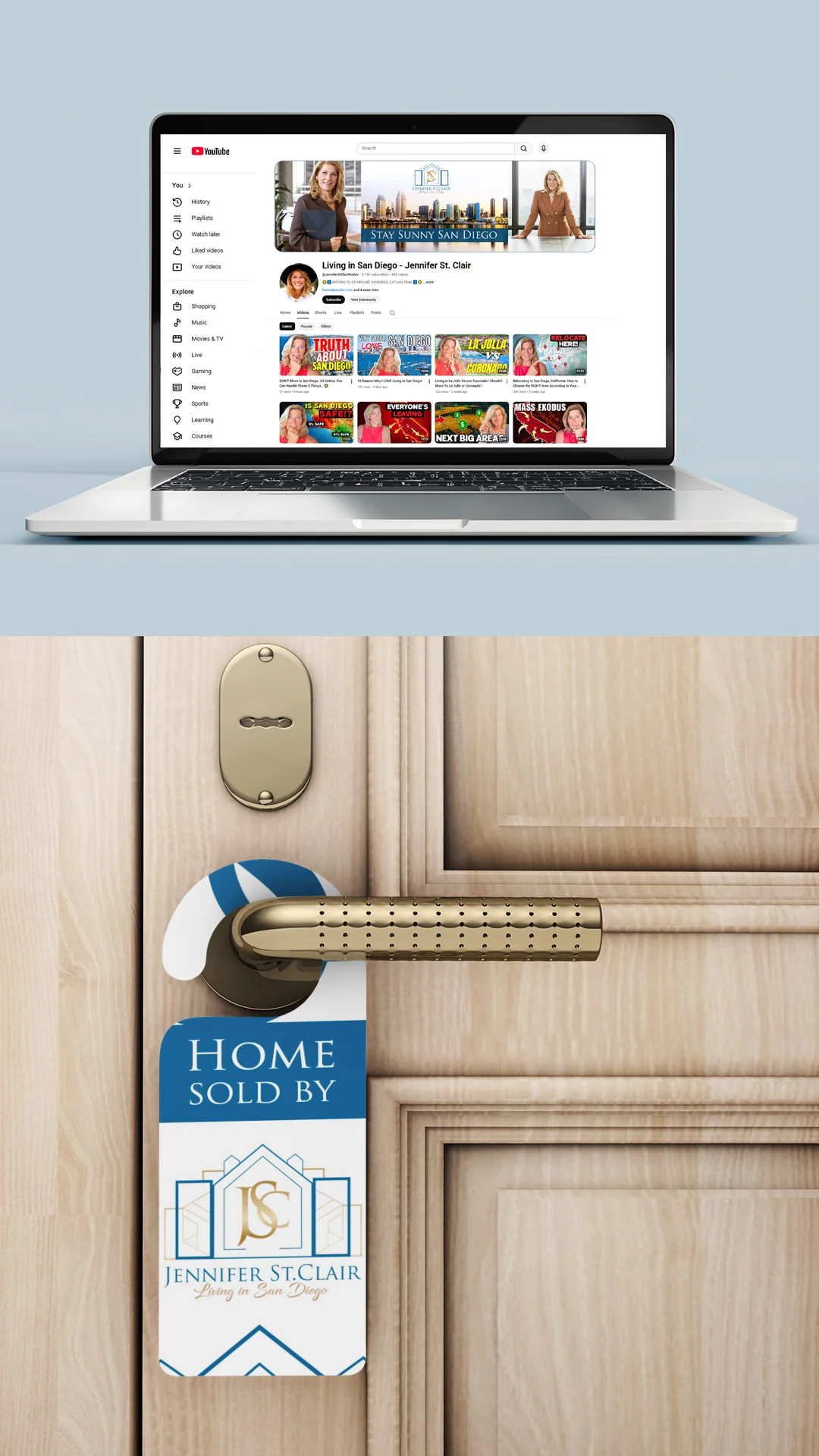
Jennifer St. Clair: A Personal Brand That Follows the Photography
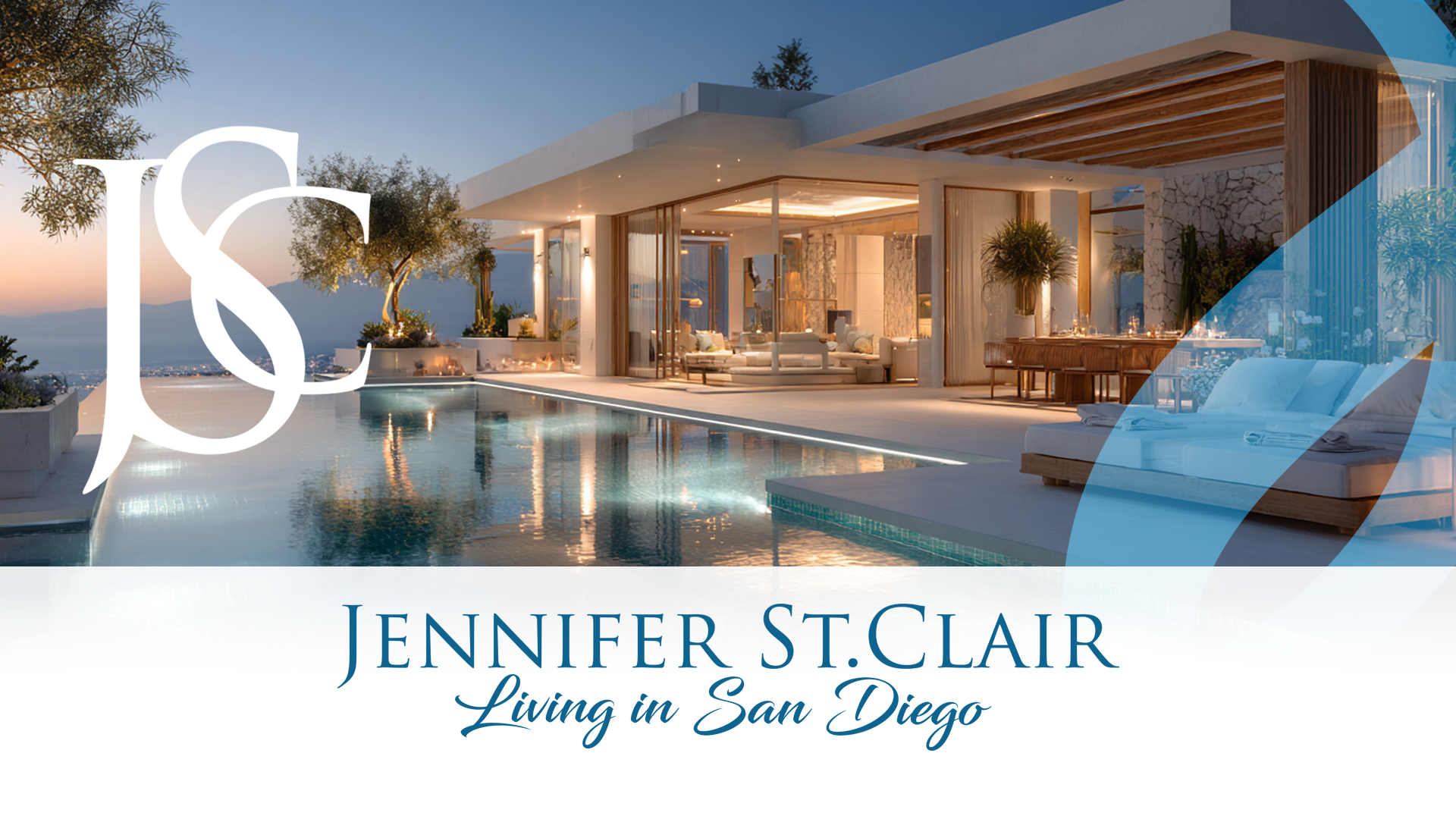
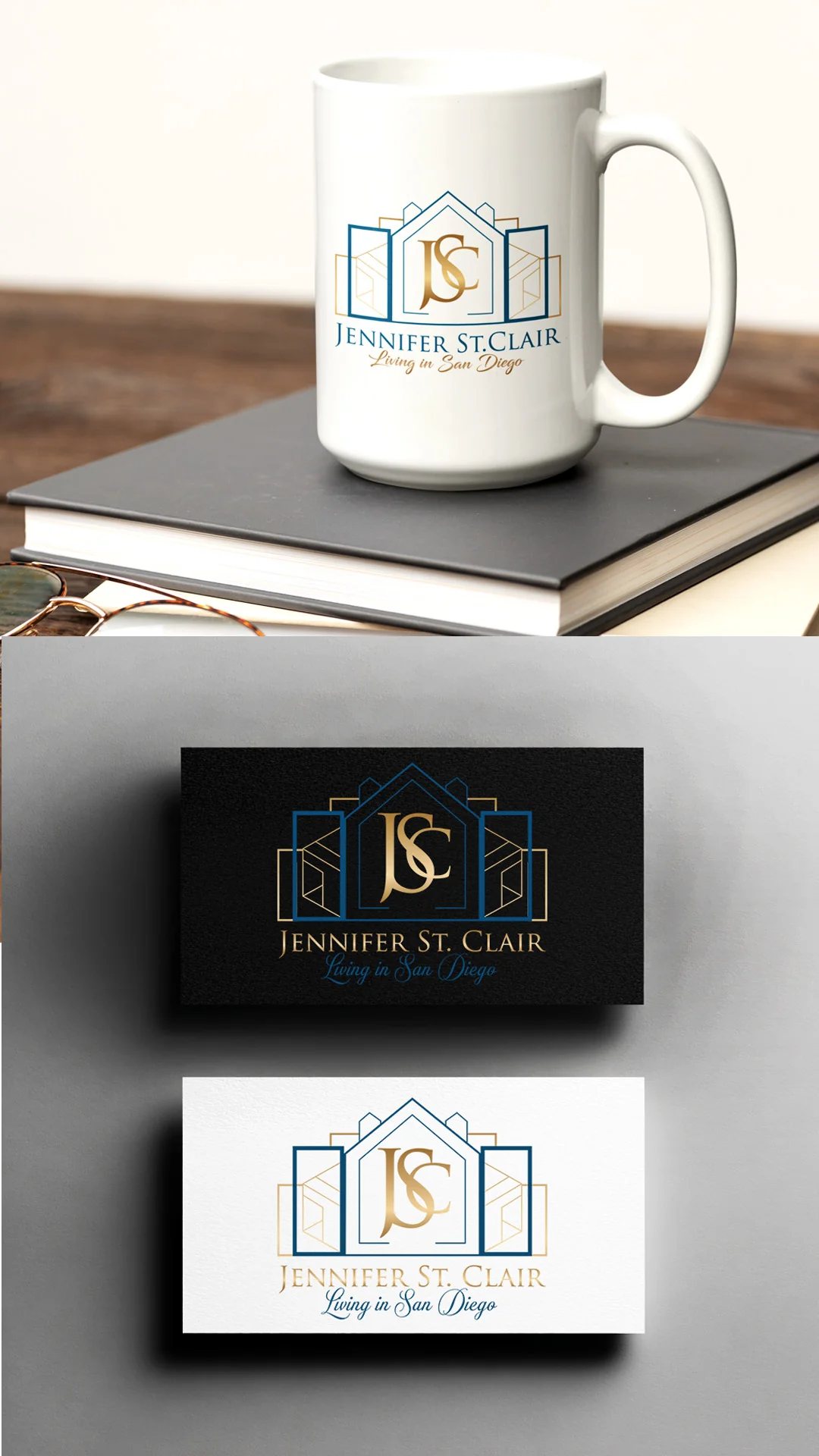
Jennifer is a real estate agent with eXp Realty of California in San Diego. She came to me with an AI-generated logo that felt more like a sticker than a personal brand. She wanted one identity for her real estate business and her YouTube channel.
Her first idea was a medallion-style concept. Then her brand photoshoot came together and pointed somewhere else entirely, so the direction pivoted mid-project. I worked through the change instead of defending my first approach, and the final mark grew out of her photography.
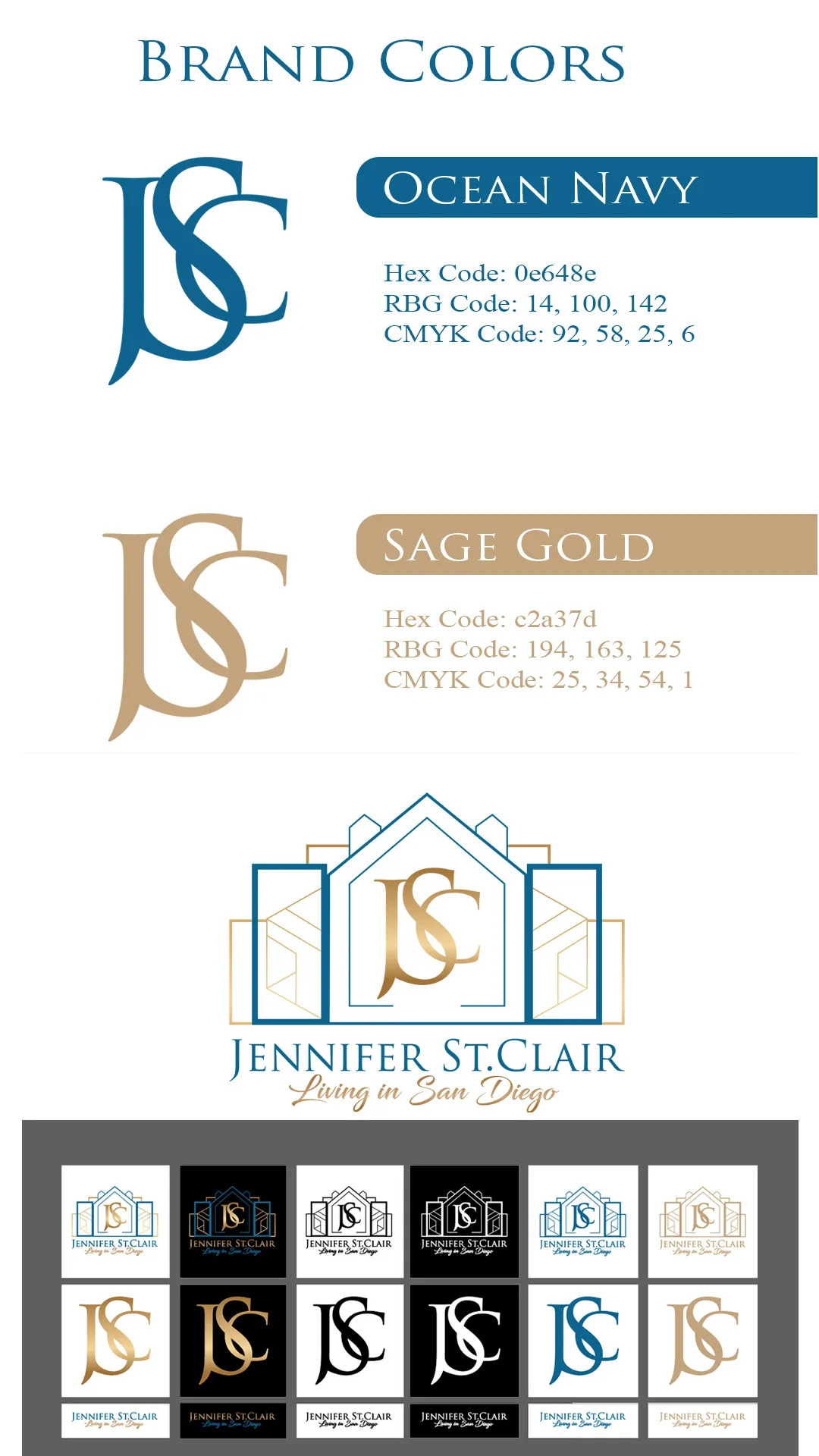
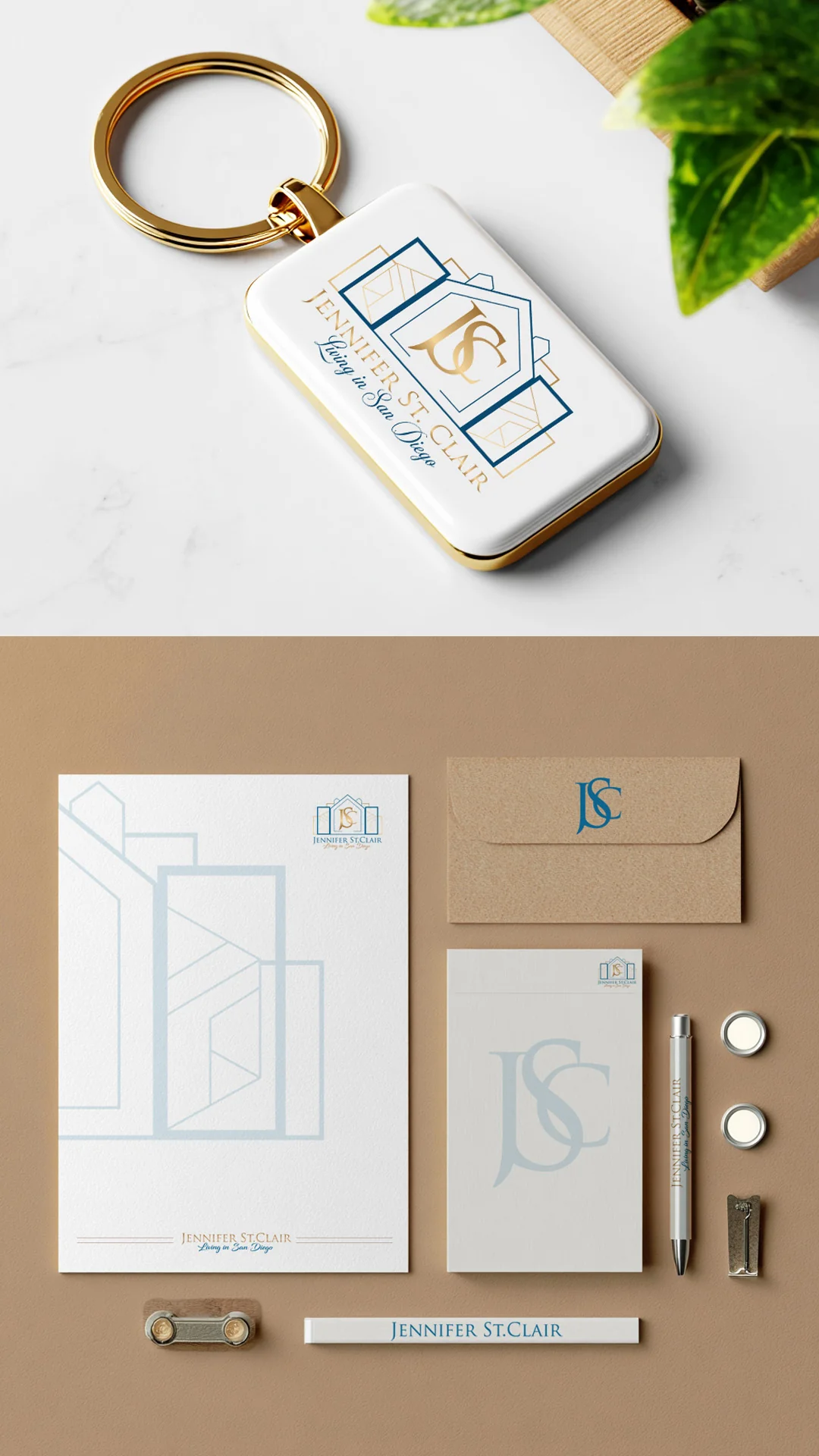
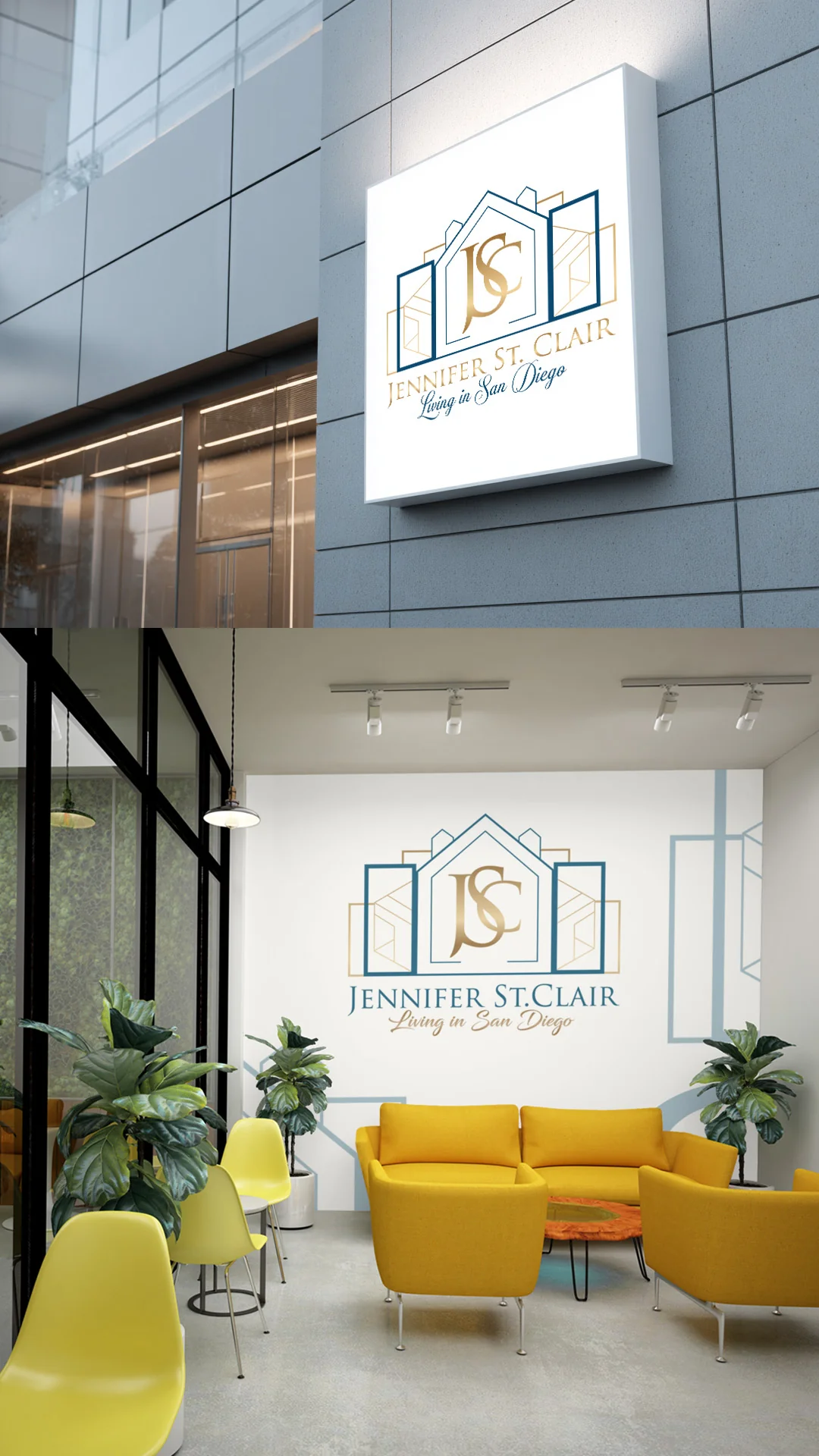
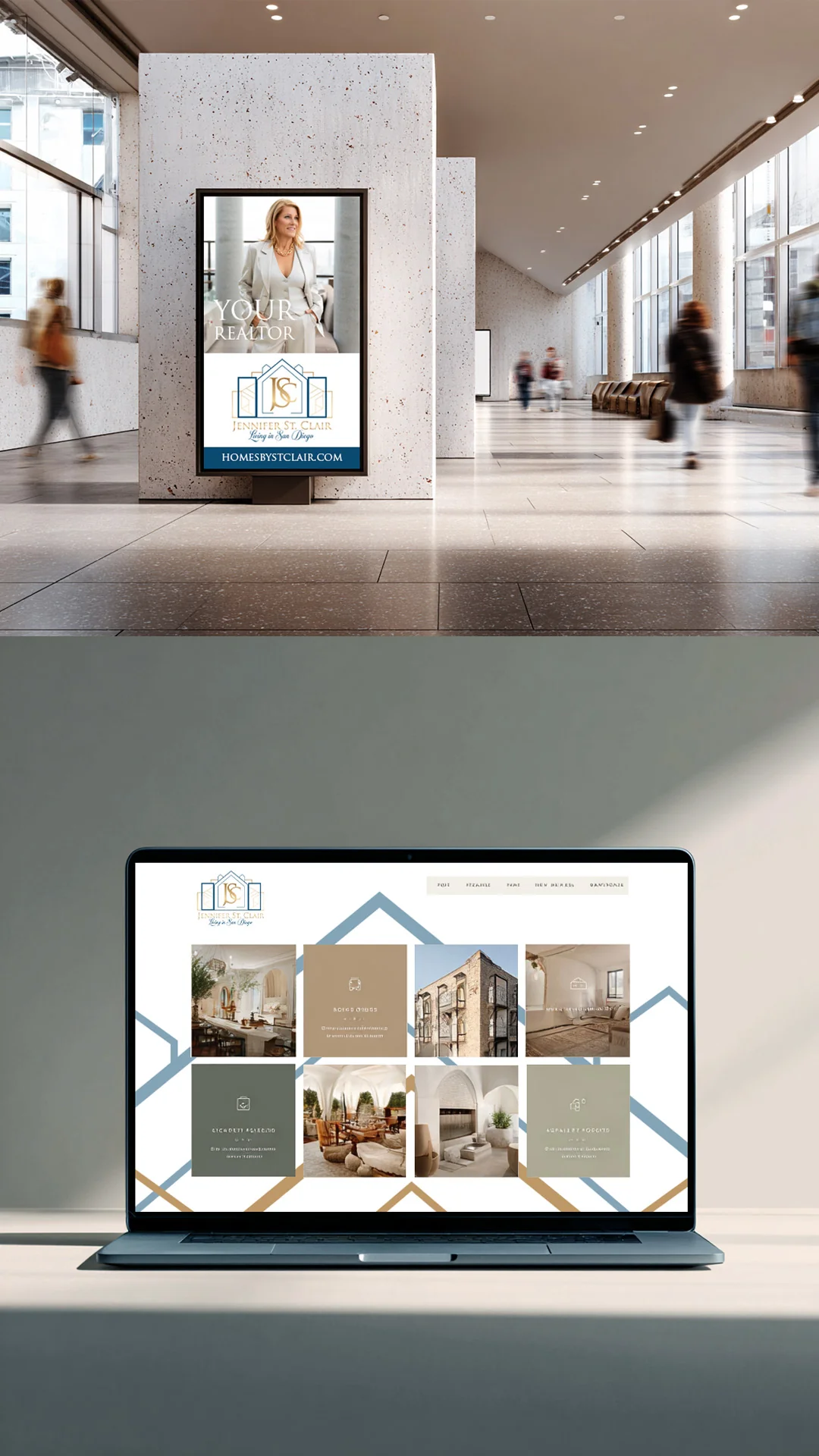
The result is a JSC monogram inside a house shape, in blue and gold. I delivered it as a full logo suite, with full-color, black, white, single-color, and icon-only versions, so it works on a dark background, a billboard, or a profile photo. In her Google review, Jennifer wrote: “It reflects exactly who I am and the brand I’ve been building.”
How Does My Real Estate Branding Process Work?
My process starts with a discovery call and ends with a brand you can use, and every step is one-on-one with me. I don’t hand your project to a team, because there isn’t one. I work directly with you from start to finish.
- Discovery. I ask about your audience, your positioning, what is motivating you to act now, and the vision you’re working toward. If you don’t have a concept yet, I build one with you.
- Research and sketches. I build inspiration boards, then present six to nine hand-drawn rough sketches to test structures and learn what you respond to.
- Grayscale, then color. I prototype in grayscale first so the shape has to work on its own. Color comes after.
- Refinement. I offer unlimited revisions and keep working toward a design you feel confident choosing, even when the direction changes partway through.
- Brand guide. You receive typeface names, color codes, logo-use guidance, background guidance, and application notes.
That last step is where many brands quietly fall apart. Jenni Romaniuk of the Ehrenberg-Bass Institute writes that a distinctive asset must evoke only one brand, and that inconsistencies in colors, fonts, and logos are the enemy of building one. Marq found that 85% of organizations have brand guidelines, yet only 30% enforce them consistently. A guide only helps if it gets used, which is why I write mine for the person who will actually apply it.

Can AI Design My Real Estate Logo?
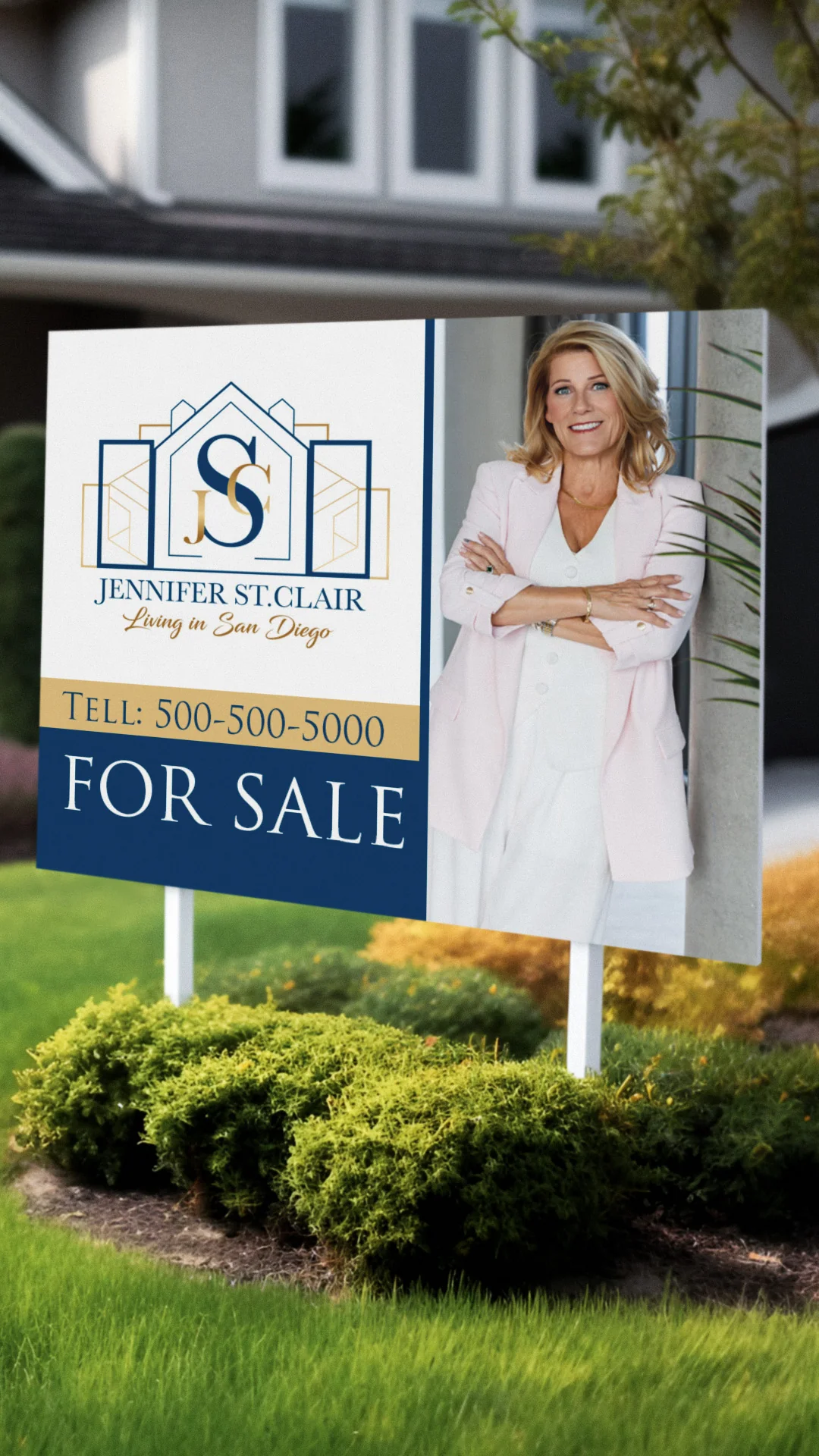
AI can produce a logo quickly, but it can’t make the judgment calls that turn a graphic into a brand. AI is a useful tool, and capable designers should adapt to it. What it can’t do is ask who your client is, what you want them to feel, or whether the mark will still read on a sign, a car door, and a phone screen.
Jennifer’s first logo is a good example. It wasn’t weak because AI made it. It was weak because it had no relationship to her positioning, her photography, or her market.
There is also an ownership question worth raising with an attorney. The U.S. Copyright Office concluded that prompts alone do not give a person enough control over an AI output to establish authorship. I’m a designer, not an attorney, so what that means for your specific mark is a question for an IP attorney. It is still worth asking before the logo goes on every sign you own.


Genuine Branding Reviews From
Business Owners I've Helped
Time - 1:05 minutes
Time - 41 seconds
Time - 1:41 minutes
Time - 42 seconds
The Bradshaw Group: A Luxury Brokerage Built From Nothing
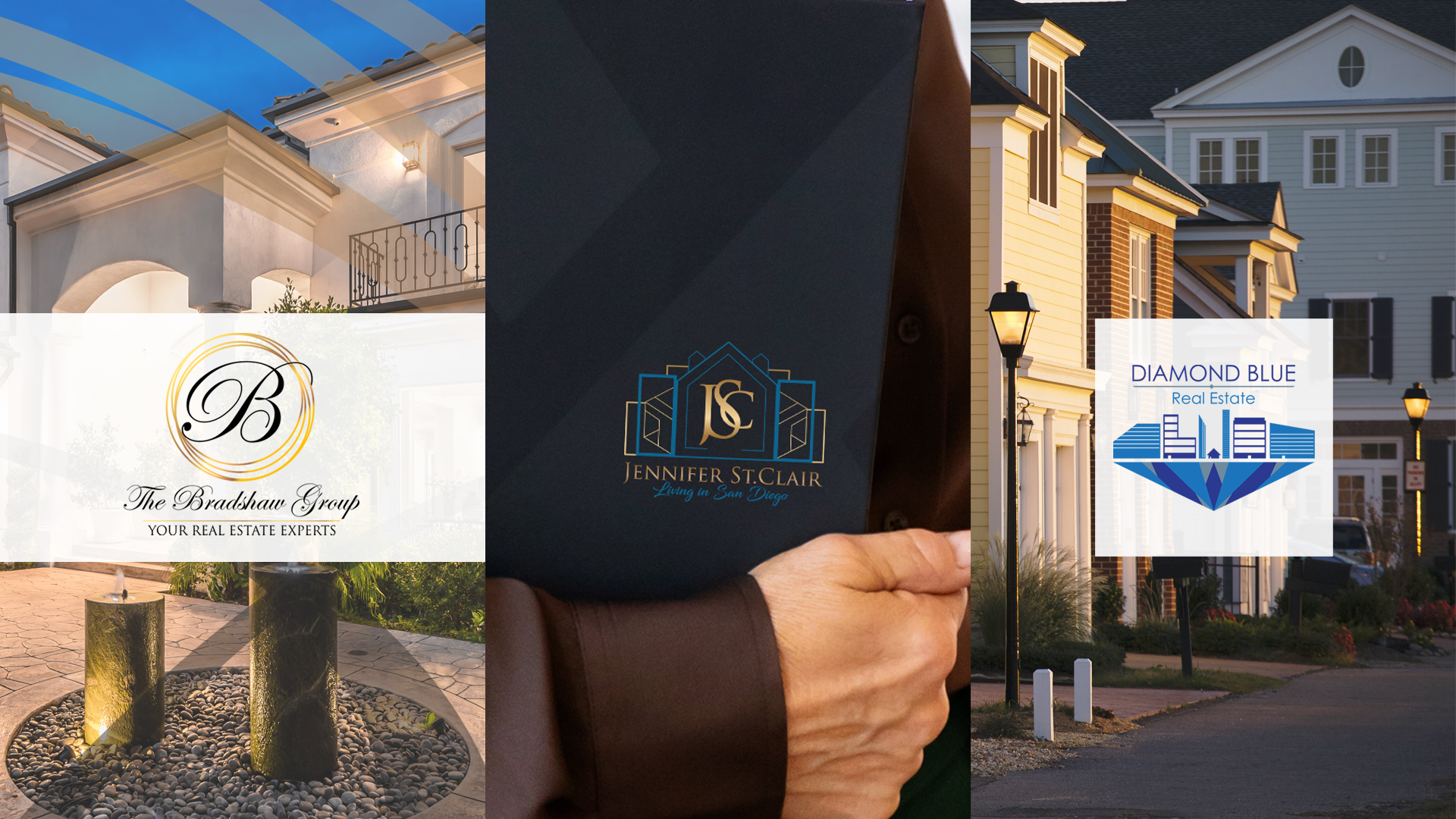
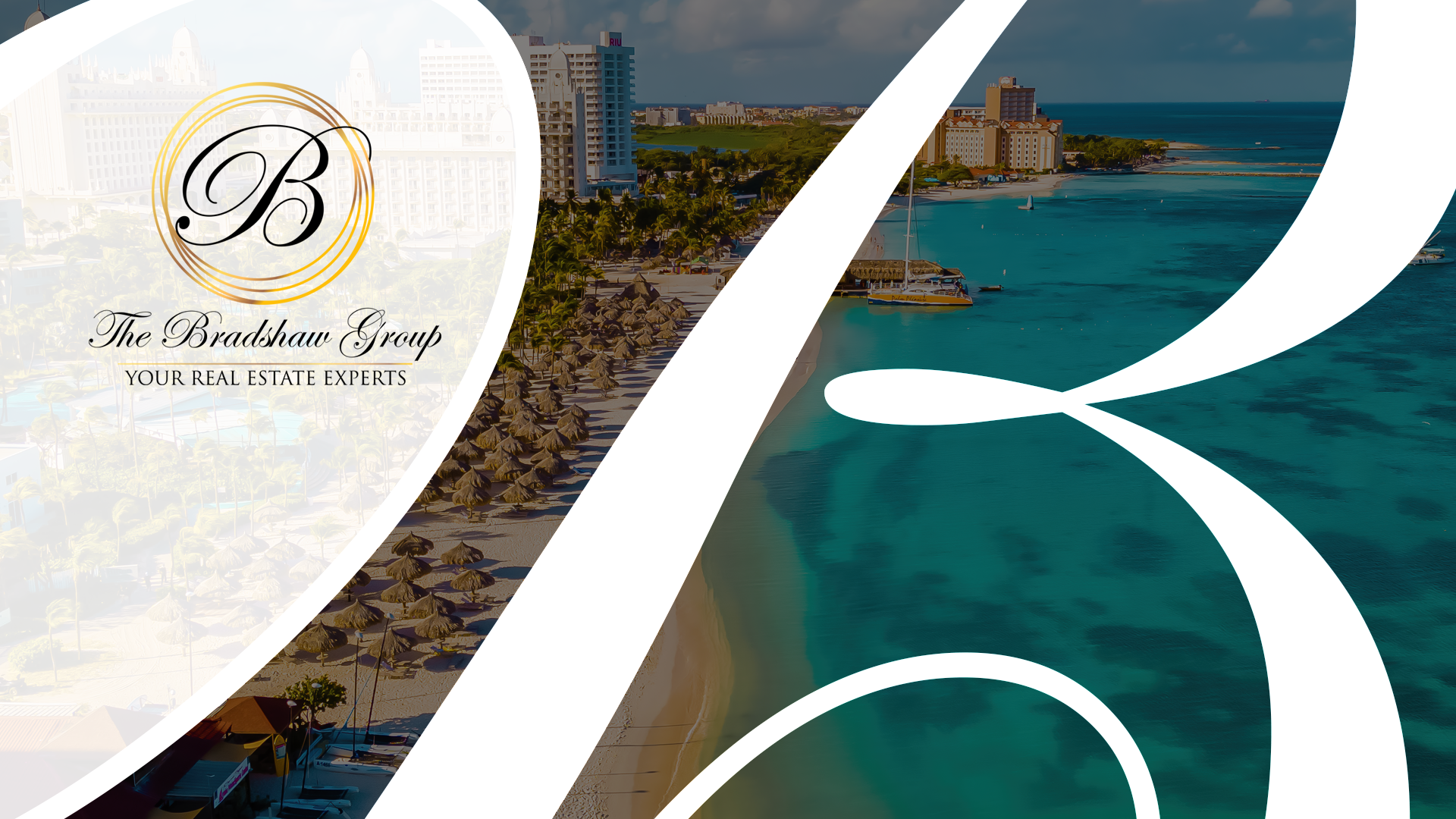
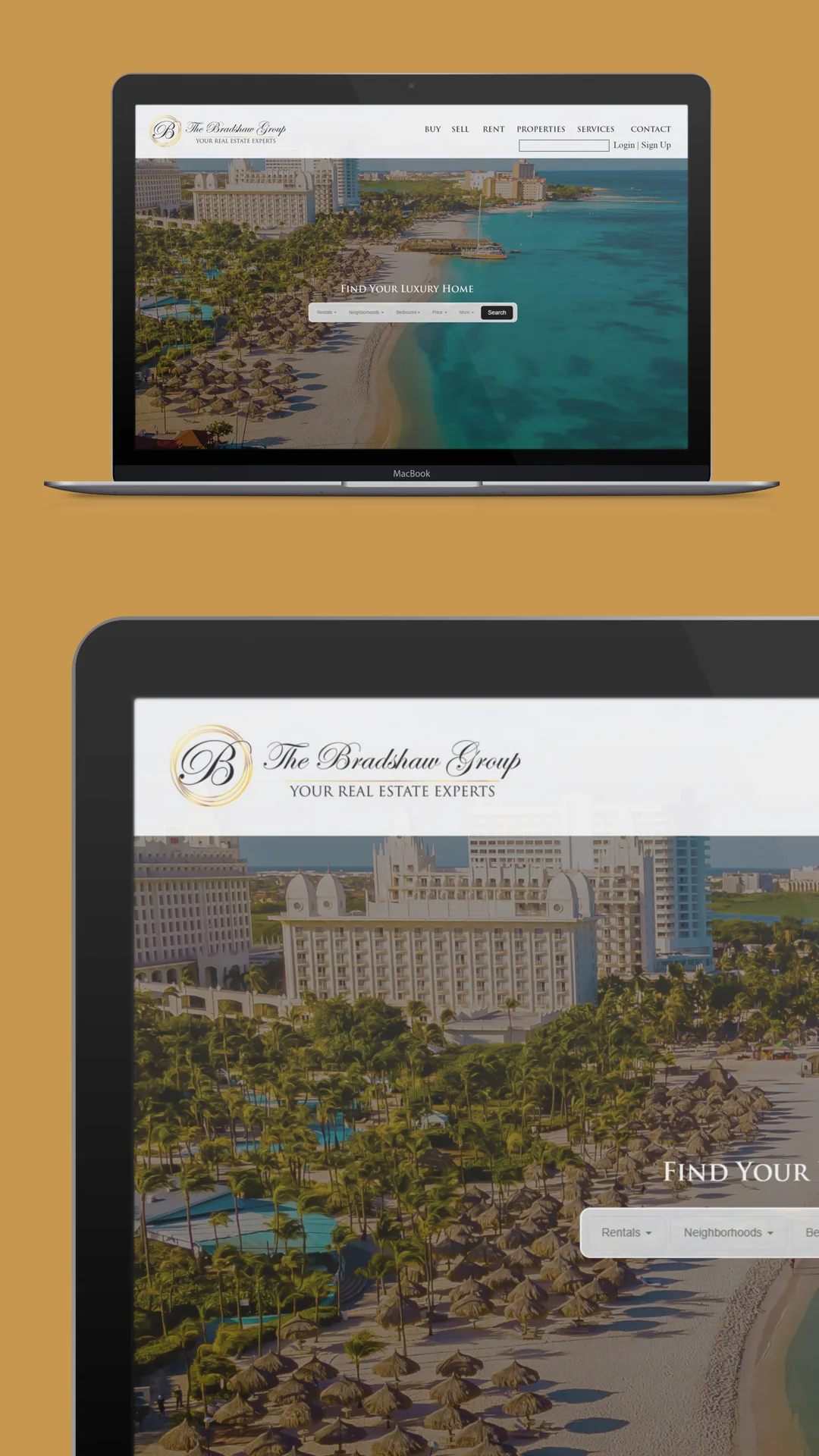
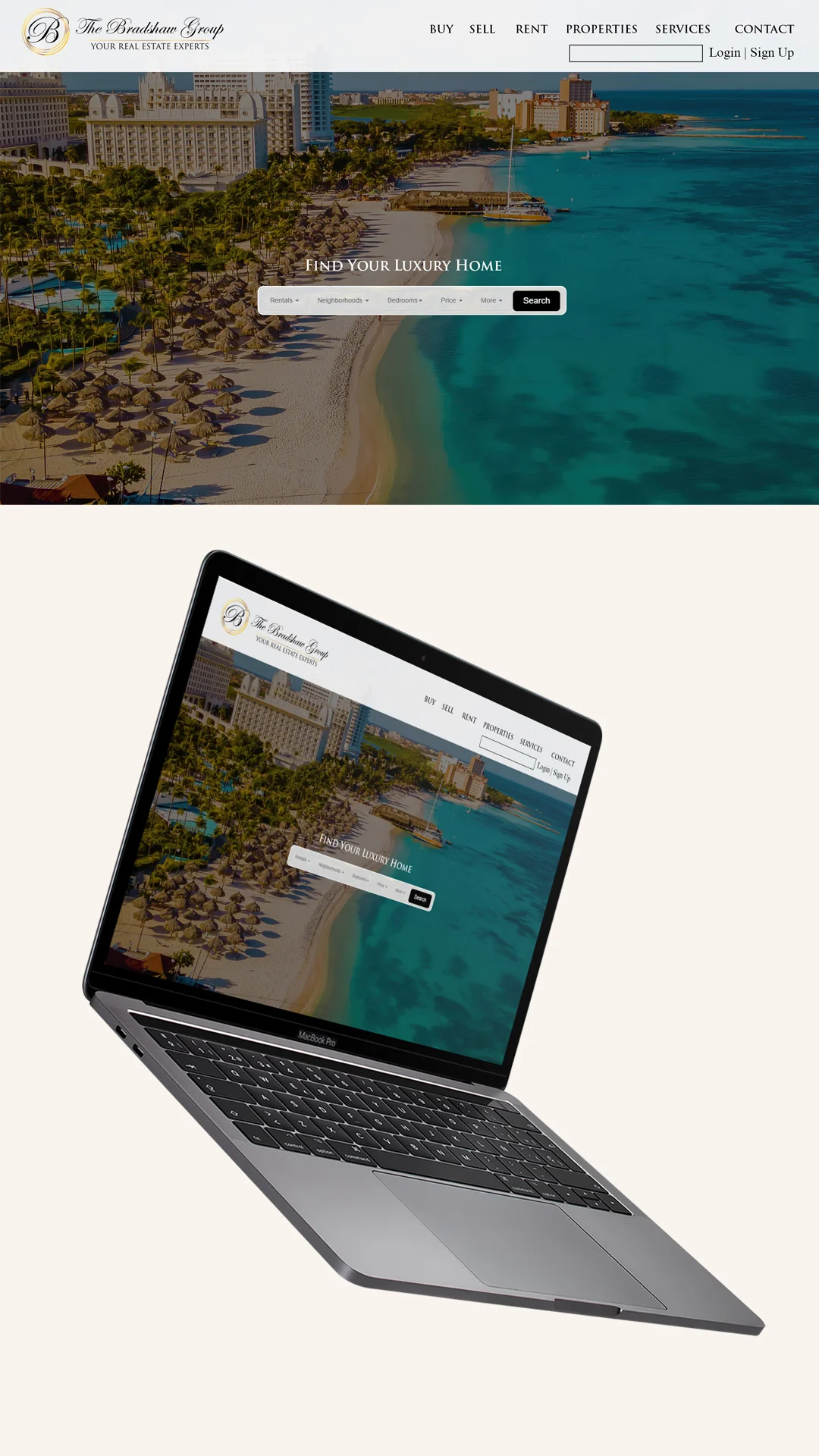
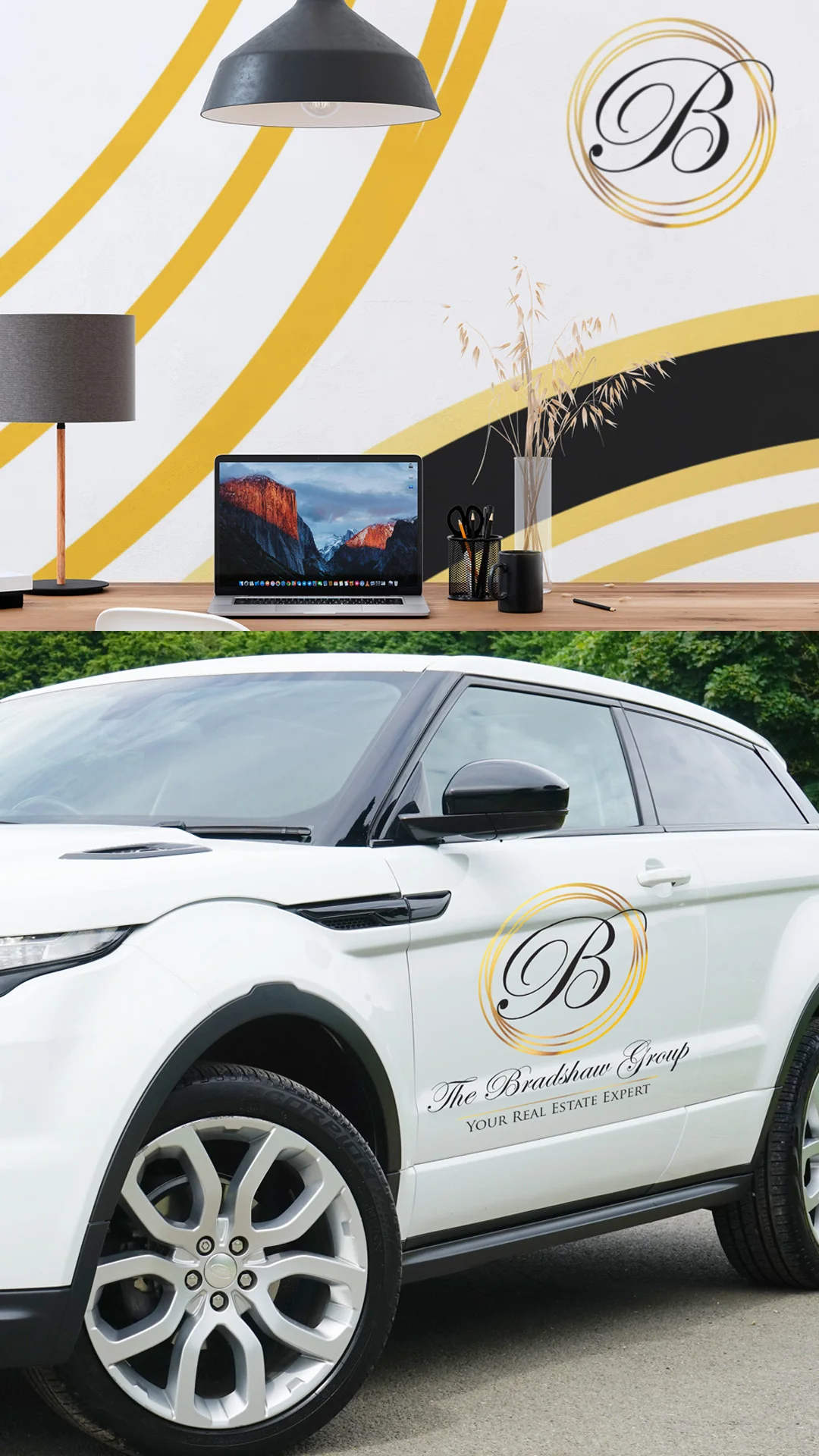
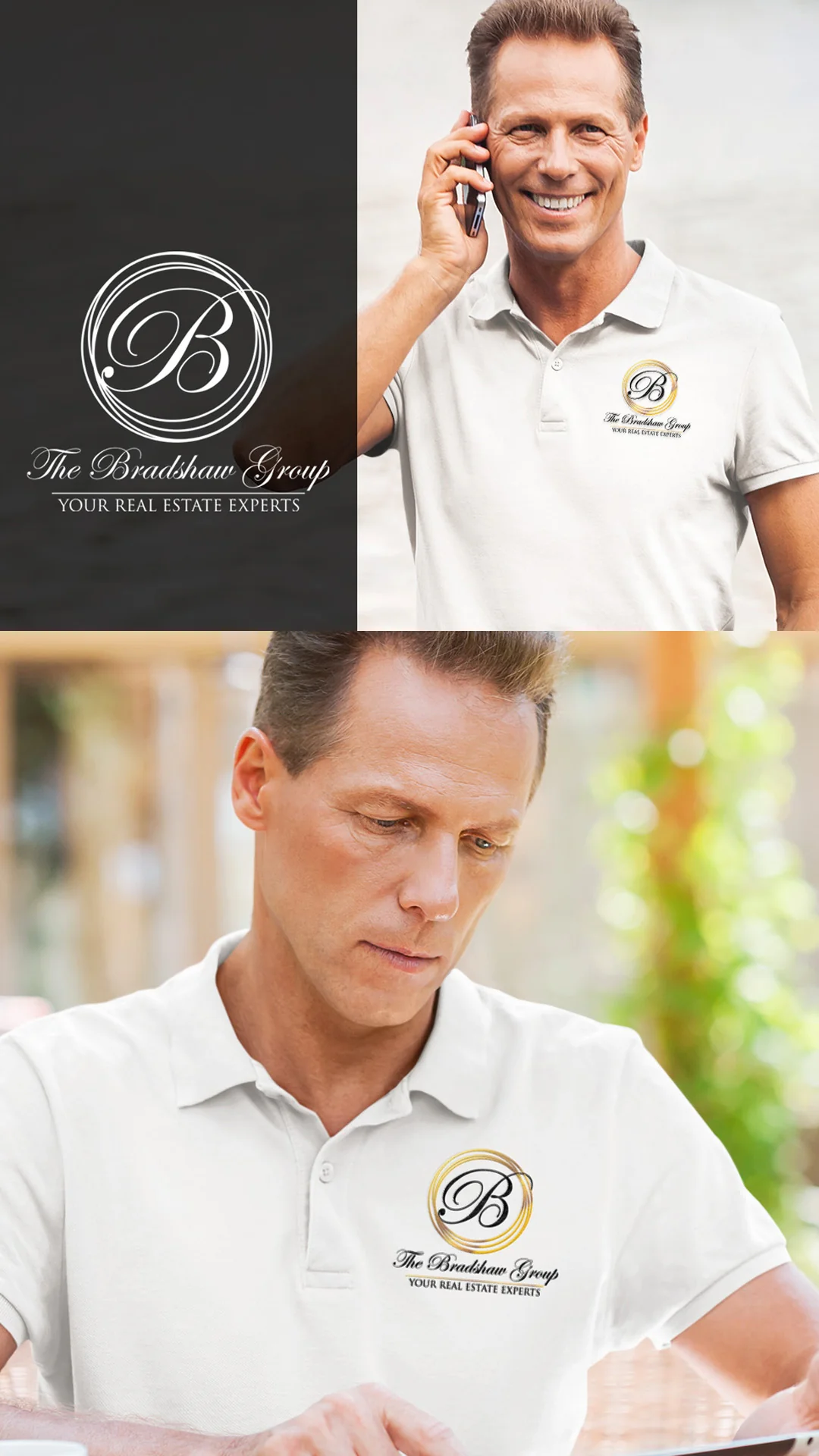
The Bradshaw Group is a luxury real estate brokerage in Palm Beach County. They came to me with no identity at all: no mark and no colors. Their clients are luxury buyers and sellers who expect polish and warmth together, and every decision traced back to that.
The mark is a cursive B for heritage and elegance, surrounded by golden rings that add movement and a modern luxury feel. The black and gold palette sits at the premium end while staying timeless. Then the identity had to work on real surfaces: the office wall, a vehicle wrap, and even a key fob.
What Does a Complete Real Estate Brand Include?
A complete real estate brand is more than a logo. It’s the set of decisions that lets people recognize you before they read your name.
- Logo and logo suite: primary, icon-only, and single-color versions for light and dark backgrounds.
- Color system and typography: the palette and typefaces that carry the personality defined in discovery.
- Usage rules: guidance on backgrounds, sizing, and placement so the mark isn’t weakened over time.
- Real-world surfaces: office walls, vehicle wraps, signs, stationery, digital displays, and social media profiles.
- Website: for many clients, your website design is the first surface they see, so it should follow the same system as everything else.

If you’re an agent, my real estate agent logo design page covers the personal-brand side in more detail. If you lead a brokerage or a premium practice, see my luxury real estate branding page. For the wider process behind every project, visit my branding design page.

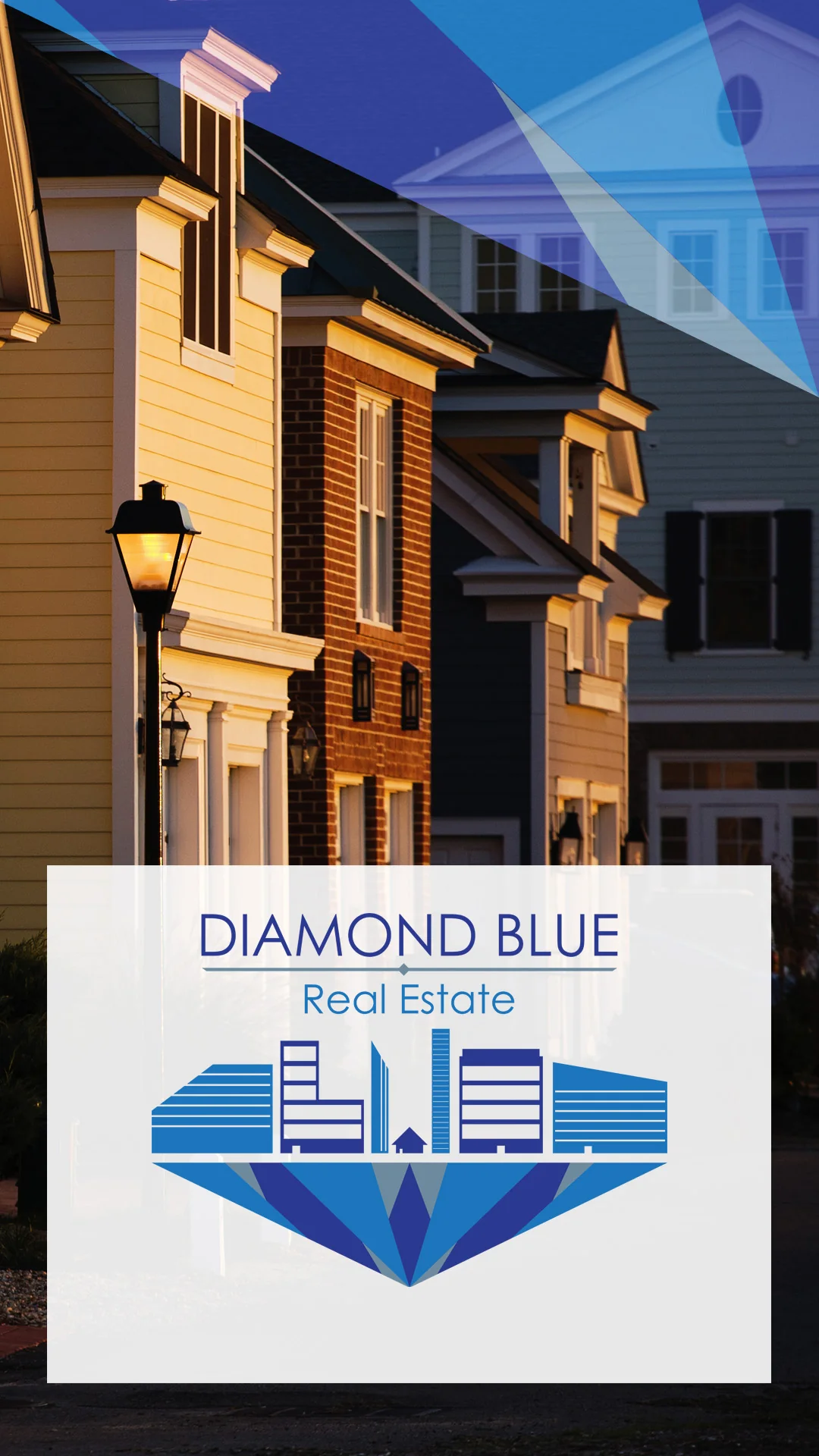
Diamond Blue Real Estate: A Mark That Isn’t Conventional
Diamond Blue Real Estate belongs to a South Florida real estate investor with commercial and residential holdings. The brief asked for a mark that showed range, felt classic, and still came across as creative. In other words, a cross of class and innovation, and not a conventional logo.
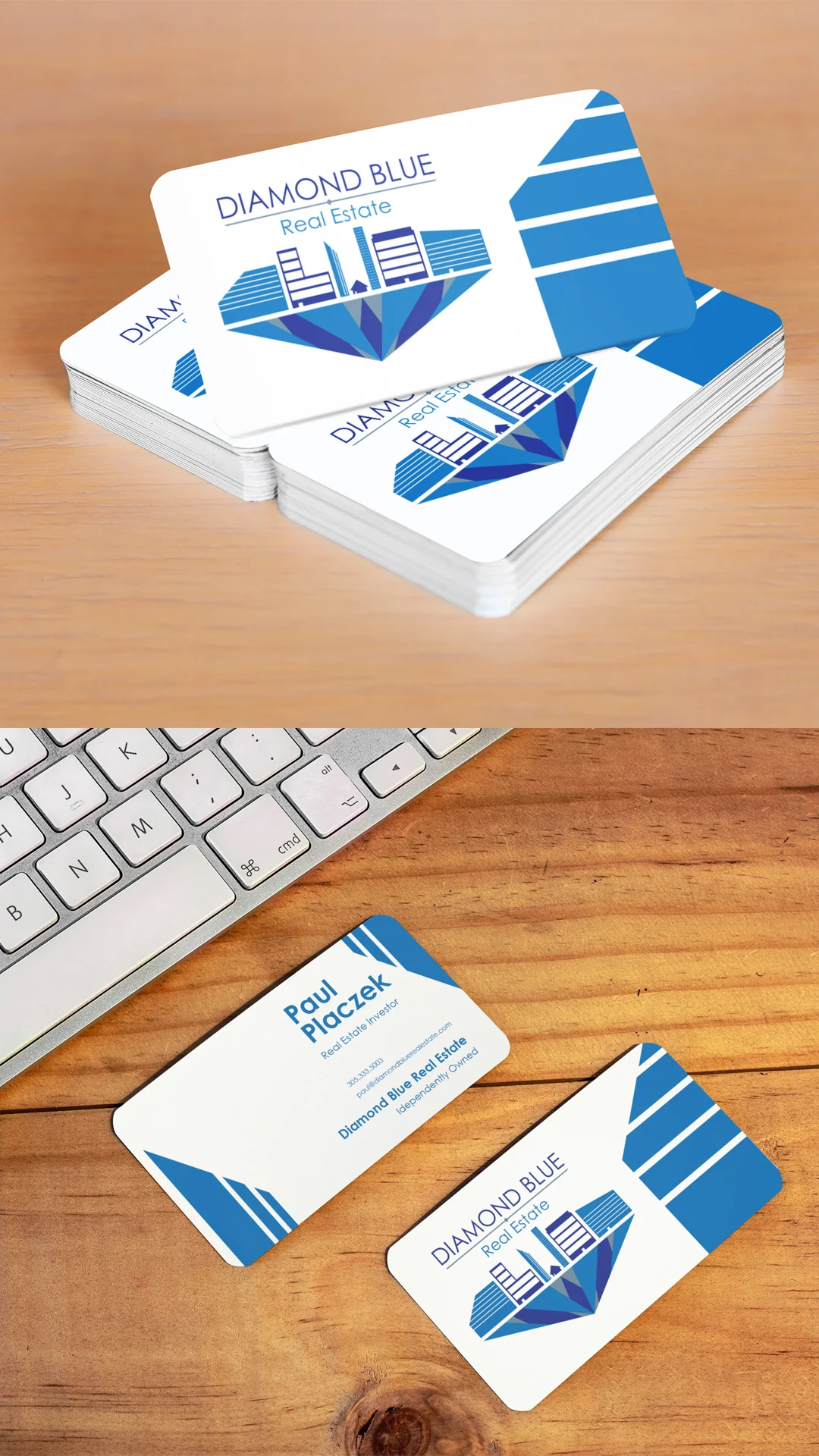
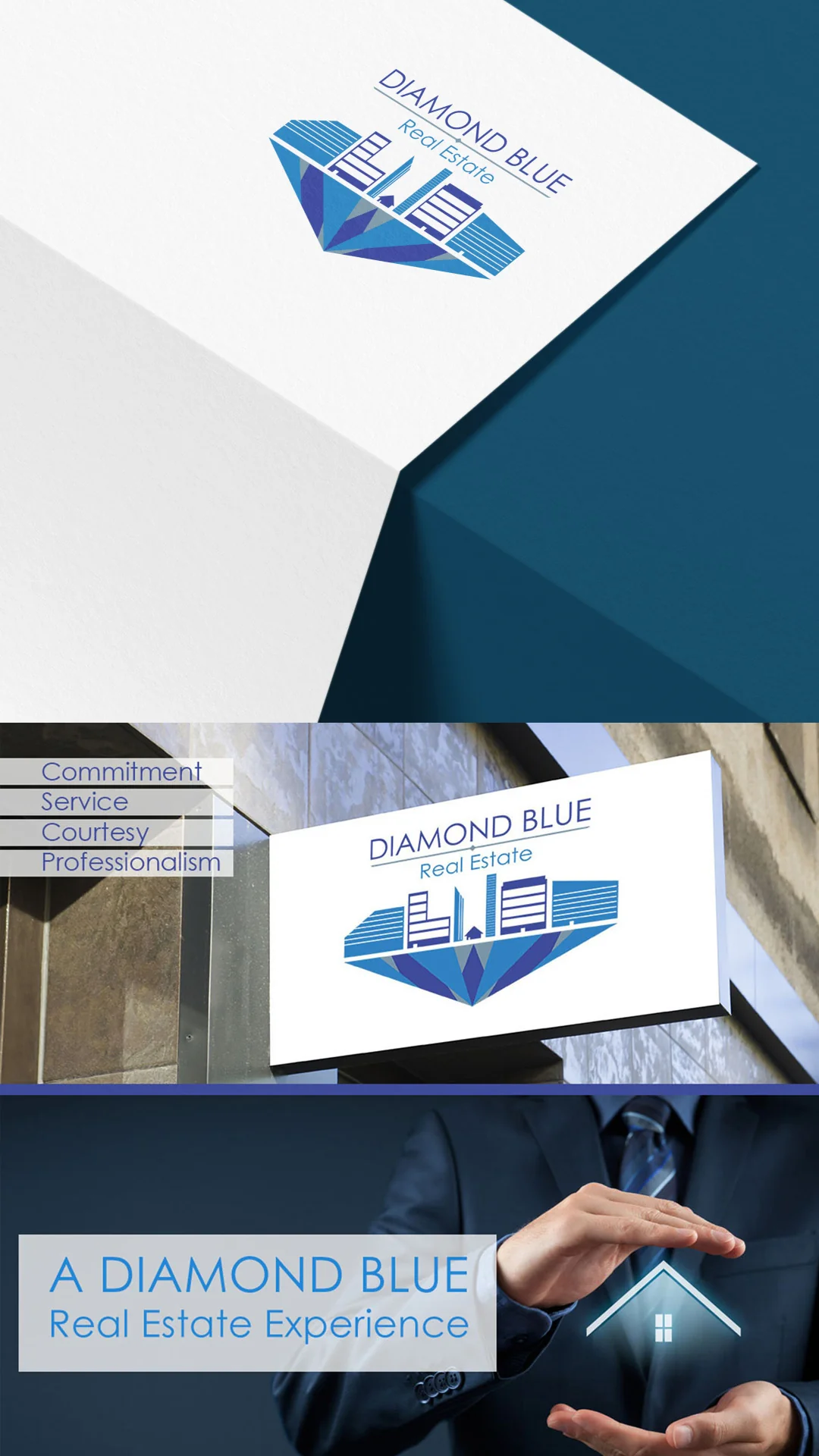
The final design shows a skyline of commercial buildings with a small house at its center, sitting above an inverted diamond. One image carries both sides of the business, commercial and residential, without a single line of explanatory text. A blue palette and clean, open lettering keep it classic. The bold geometry keeps it from looking like every other real estate mark.
The identity carries onto stationery as well: a presentation folder, business cards, a pen, and buttons, with the company’s core values printed on the folder cover.
What Do Clients Judge Before They Ever Call You?
Clients judge your visual presentation first, and often within a fraction of a second. Research on web pages found that 50 milliseconds is enough for people to form a judgment about visual appeal.
Real estate makes this more pressing because so much of the search now starts online. 36% of sellers now find their agent through online channels, more than double the share in 2018. The same Zillow report found that 59% of sellers hired the first agent they spoke with. If your logo, website, and photography feel mismatched, that impression is made before the first conversation starts.
The impression also travels through other people. 66% of sellers found their agent through a referral or a past agent, and 35% named the agent’s reputation as a deciding factor. Someone else is describing you to your next client. A brand gives them something clear to describe.

Who Is Real Estate Branding For?
Real estate branding is for agents, brokerages, teams, and investors who want to be recognized for who they are and not for the template they share with everyone else.
That includes an agent leaving a brokerage who needs a brand that goes with them. It includes a new brokerage starting from a blank page, and an investor whose portfolio spans commercial and residential property. The three projects above came from those situations, and each one needed something different from me.
Repeat business also depends on being remembered. The typical Realtor earns 28% of business from repeat clients and another 22% from referrals from past clients, and both depend on someone remembering who you are.
Frequently Asked Questions
Start with positioning: decide what you sell, who it’s for, and why they should care. Then build your logo, colors, photography, and profiles from those answers so every surface describes the same agent. This matters because 66% of sellers found their agent through a referral or a past agent, which means other people are describing you to your next client. An agent logo design built around your photography and market gives them something clear to describe.
I’m a designer, so I don’t provide ongoing marketing execution, paid ad management, or ongoing SEO services. What I can tell you is that a strong digital presence starts with a consistent identity: the same logo, colors, and photography on your website, social profiles, and email signature. That matters because 36% of sellers now find their agent through online channels. I design the website design and social templates that carry your brand, and you or a marketing partner decide where and how they run.
You can work with me directly. I design logos and full brand identities for real estate agents, brokerages, teams, and investors, and every project is one-on-one with me. My agent logo design page covers personal brands, and my luxury real estate branding page covers brokerages and premium practices. When you compare designers, look for real estate projects in their portfolio, a clear process, and reviews that describe how they handled changes along the way.
Build the story from three answers: what you sell, who it’s for, and why they should care. Then keep it specific to you. Jennifer St. Clair’s brand grew out of her photography and her San Diego market instead of a template, which is why her mark felt like hers. Finally, show the same story everywhere it appears, from your logo to your listing presentation, so it reads the same each time.
The most useful tool is a brand guide. The guides I deliver can include typeface names, color codes, logo-use guidance, background guidance, and application notes. Template platforms can help you apply a guide, but a guide only works when it’s used: 85% of organizations have brand guidelines, yet only 30% enforce them consistently. Whichever tools you choose, keep the guide as your source of truth.
MORE CLIENT Testimonials
Time - 1:02 minutes
Time - 4:55 minutes
Everyone wants to see reviews from trusted sources that can validate whether a product or service. Therefore, our design and logo brands reviews play a crucial role in helping them decide if it's worth their investment.
The following is a page source of design reviews from past clients: video and written reviews of the client experiences working with Branding Design Pro.
Time - 58 seconds
Time - 1:31 minutes
Ready to Talk About Your Real Estate Branding?
You know your market, and I know how a brand gets built around it. The best real estate branding comes from putting those two things in the same conversation.
Tell me about your business, your clients, and where you want your brand to go. I’ll tell you what I’d recommend, what can wait, and what a project like yours would involve before you commit to anything.
About the Designer
I’m Kenal Louis, the designer behind Branding Design Pro. I have 15 years of design experience, and I create logos and branding packages for real estate agents, brokers, and brokerages.
I work with every client one-on-one, and every project is designed and delivered by me, from the first discovery call to the final brand guide.