TL;DR
- Professional branding services for your business growth go beyond a logo: they build a complete visual and strategic system that shapes how your market perceives you before you ever speak to them.
- Brand consistency is directly tied to revenue: consistent presentation across channels can increase revenue by 10–20% on average, with top performers reporting gains up to 33%.
- The right moment to invest in professional branding is before a major move: a product launch, a retail pitch, a rebrand, or any situation where first impressions carry real financial weight.
- A professional brand system includes logo design, color and typography standards, messaging, brand guidelines, packaging, and digital assets, all built around your specific audience and market position.
- Working one-on-one with a single experienced designer, rather than through a crowdsourced concept marketplace, means every decision traces back to your business goals, not a generic template.
You have a meeting coming up. Maybe it is a buyer from a regional retail chain, a potential investor, or a new market you have been working toward for two years. The product is ready. The pitch is solid. But when you pull up your website or hand over your packaging, something feels off. The logo looks like a placeholder. The colors do not match. Nothing quite holds together. That is the moment professional branding services for your business growth stop being a nice-to-have and become the deciding factor.
I have seen this situation more times than I can count. A business with a real offer and a serious founder, held back at the critical moment by a visual identity that was never built to carry weight.
When the stakes go up, your brand has to hold up
A credible, consistent visual identity makes your business recognizable, and that recognition opens new revenue channels. It makes it easier for the right prospects to see you as the obvious fit for what they need. That recognition turns into income. It turns into deals. But it all centers on how well your brand strategy is executed.
A well-built brand works across every channel, online and off, speaking on behalf of your business even when you are not in the room. The result is a wider audience and a customer base that keeps growing with purpose rather than by accident.

What Do Professional Branding Services for Business Growth Actually Include?
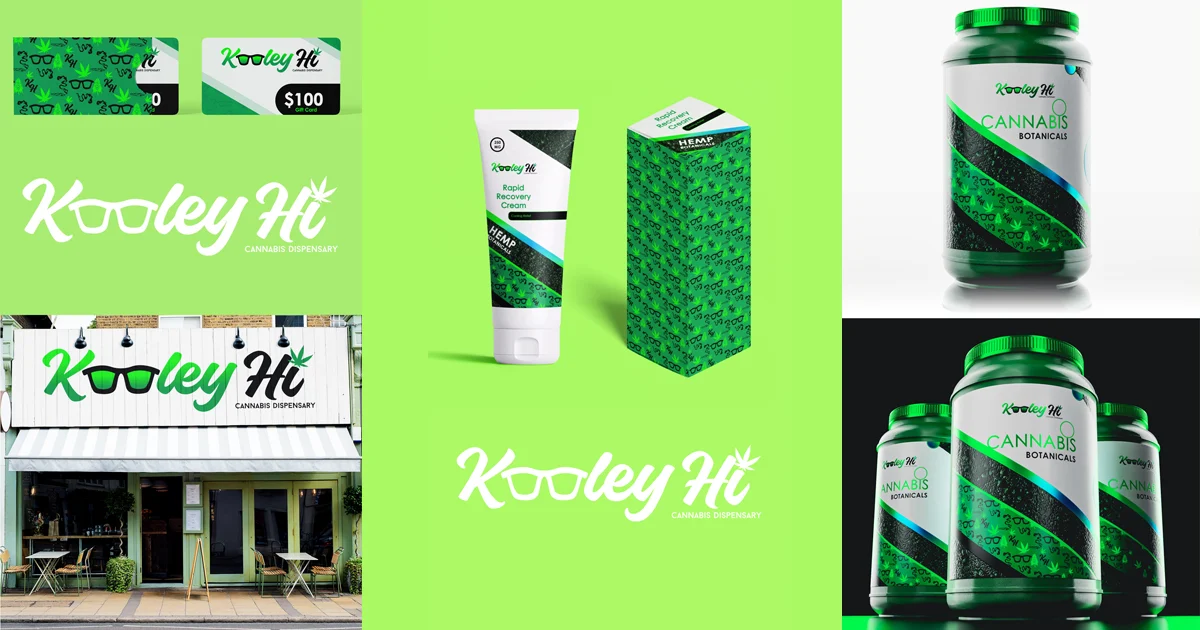
Professional branding services for your business growth cover every element your audience encounters: logo design, color selection, typography, messaging, guidelines, packaging, and digital assets built into a single coherent system. Done right, that system builds recognition, earns loyalty, and creates the kind of trust that drives lasting growth.
Brand Identity Design Services bring all of these elements together. Not a collection of disconnected files, but a set of standards and assets that work across every surface your brand touches.
Branding services for startups and new businesses are especially powerful in a crowded market, because they establish credibility before the business has years of reputation to lean on.
A branding services list typically includes:

- Logo design: A visual mark that captures the essence of your brand and stays memorable across every application (logo design).
- Color selection: A palette that evokes the right emotions and aligns with your brand’s positioning.
- Typography: Fonts that reinforce your visual identity and read consistently at every size and surface.
- Messaging: The tone, voice, and language that connects your brand to its intended audience.
- Brand guidelines: Clear standards so your identity stays consistent across every touchpoint, every time.
- Marketing collateral: Business cards, brochures, and supporting materials that carry your brand into every room.
- Digital presence: A consistent online identity, from your website to your social profiles, that reflects your brand accurately.
- Product packaging and design: Packaging that stands out on the shelf and tells your brand story at a glance.
- 3D product renderings: High-quality digital visuals of your product for use in marketing, pitches, and promotional campaigns.
- Brand strategy: A long-term plan that ties every brand decision back to a specific business goal.
- Market research: Understanding your audience, your competitors, and your industry so the strategy is grounded in reality.
- Brand audits: Reviewing your current brand to identify what is working, what is not, and where alignment needs to improve.
The High-Stakes Moments That Make Branding Urgent
Most business owners do not think about professional branding until a specific moment forces the question. That moment is almost always high-stakes: a retail buyer meeting, a product launch, a pitch to investors, or the realization that a starter logo built three years ago is now doing real damage to how the business is perceived.
One situation I come across regularly is the founder who delayed their launch. Life intervenes: a family emergency, financial disruption, a major personal curveball. The business idea never went away, but the momentum did. When they are ready to move again, the visual identity they had sketched out no longer fits where the business has grown. Starting fresh with a professional system gives that momentum a solid foundation instead of a placeholder to outgrow again in another year.
Another common moment is the rebrand. A business has been operating for years on a logo that was improvised, generated by an automated tool, or created by someone without design training. It worked well enough early on. Now the business is pitching larger clients, entering new markets, or competing at a level where the visual identity is actively working against them. That is when the investment in a complete brand system pays for itself in credibility alone.
Personal Branding and Why It Earns Real Authority

Personal branding is the deliberate shaping of how others perceive your expertise, your values, and your professional identity. It is not self-promotion for its own sake. It is the strategic decision to make your strengths visible so the right people can find you and trust you before the first conversation happens.
A strong personal brand creates dependability. Clients and colleagues begin to rely on what you bring to the table. They can anticipate your strengths, which makes them more comfortable handing you real responsibility. That predictability is not a limitation; it is the engine of referrals and repeat business.
People feel more at ease working with someone whose capabilities they can read clearly. Your personal brand is the most direct marketing tool you have, because you are the living proof of what your business delivers. No ad campaign can replicate that.
Building a personal brand that holds up under scrutiny

Start by being honest about what you actually bring to the table. List your genuine strengths and the areas where you are still developing. That self-awareness is the foundation everything else is built on. You cannot ask others to trust something you have not clearly defined yourself.
Understand your existing skills at a real level. Your capabilities shape how far you can go in the direction you are heading. When you know what you are genuinely good at, you also get clarity on the gaps and the motivation to close them. That honesty separates people who grow from people who plateau.
Be open to outside perspective. Personal reflection matters, but so does paying attention to how people actually respond to you. That input is some of the most useful signal you will get about whether your brand is landing the way you intend.
Finally, know who you are talking to. The more specific you are about your target audience, the more effective every brand decision becomes. This applies to business branding and personal branding equally: know who you are talking to before you decide what to say.
How Does Brand Consistency Drive Revenue for Professional Branding Services?
Brand consistency drives revenue because it builds the kind of trust that shortens a buyer’s decision cycle. When every touchpoint looks and sounds like the same business, people feel confident they know what they are getting. That confidence removes friction from the purchase decision.
The numbers behind this are significant. Consistent brand presentation across all channels can increase revenue by 10–20% on average, with top-performing firms reporting gains up to 33%. 68% of organizations say that brand consistency has contributed at least 10% to their revenue growth. These are not marginal effects.
Research summarized by JohnnyGrow shows that active brand management programs increase lead volume, marketing ROI, and year-over-year revenue growth, especially in contexts where trust and differentiation are critical. McKinsey research indicates that brands with consistent cross-channel strategies achieve 23% higher revenue growth than those with inconsistent experiences.
The gap between intention and execution is where most businesses lose ground. Lucidpress studies show that while most organizations acknowledge brand consistency as a significant revenue driver, many lack brand guidelines that are widely used across their organization. That gap is exactly what a professional brand system closes.

How Much Does It Cost to Hire Someone for Branding?
The investment in professional branding services varies depending on the scope of the project, the specific deliverables, and the experience of the designer. Different service tiers exist based on what a business actually needs at its stage of growth.
At Branding Design Pro, logo concepts created from scratch typically start around $2,000. Refining an existing composition a client has already developed may begin around $1,000. Full branding packages, which include logo development, brand guidelines, packaging, website design, and supporting assets, commonly range from $5,000 to $12,000 or more depending on scope and deliverables.
What drives the number is what is actually needed: how many brand touchpoints require design, how complex the packaging or digital presence is, and how much strategic direction the project requires. The Blessed Hands CBD engagement, for example, reached $10,000 because it combined product packaging, social media templates, animation, and a full website into a single cohesive system.
Industry analyses suggest many companies now allocate 10–20% of their marketing budgets to branding or rebranding initiatives, reflecting a shift toward treating brand as a core business asset rather than a discretionary design expense.
To get a clearer sense of what working with a professional produces, reading client reviews helps you understand the range of experience and outcomes different providers deliver.
What Pitfalls Undermine a Branding Investment?
Investing in professional branding and then mismanaging it afterward is one of the most common ways businesses lose the value they paid for. These are the patterns I see most often.
Treating branding as a one-time task
A logo is not branding. A logo is one element of a brand system. When businesses treat the initial design project as the finish line rather than the starting point, the brand fragments over time. New assets get created by different vendors, in different styles, with different color values. The result is a market presence that looks inconsistent and erodes the trust the original investment was meant to build.
Building without a system
Allowing different people or vendors to create assets without a shared brand system is the fastest way to produce visual chaos. I build brand guidelines into every full identity project for exactly this reason. Typeface names, color codes, logo-use rules, background guidance, and application notes give whoever touches the brand next a clear set of standards to follow.
Focusing on aesthetics while ignoring positioning
A beautiful logo attached to unclear positioning does not perform. Design is not decoration. It is visual problem-solving connected to a business’s intention, audience, and use case. When I work through the discovery process with a client, the conversation covers target audience demographics, psychographics, market position, and business purpose before a single sketch is drawn. The visual direction follows the strategy, not the other way around.
Rebranding without a clear business case
Rebranding for the sake of a refresh, without a clear reason grounded in where the business is heading, risks losing existing brand equity and confusing the customers who already recognize you. A rebrand should solve a specific problem: an audience that has shifted, a market position that no longer fits, or a visual identity that was never professionally built in the first place. That last reason is the most common one I encounter.

How the Design Process Works from Discovery to Final Files
Every project at Branding Design Pro starts the same way: a signed agreement, a deposit, and a discovery call. That call is where the real work begins.
I ask about the target audience’s age range, psychographics, demographics, and motivations. I ask about the client’s vision, any existing concept or tagline, the assets they need, and the industry context. If the client does not have a concept yet, we build one together during that conversation.
From there, I conduct research and build inspiration boards before drawing anything. I usually present six to nine hand-drawn rough compositional sketches to test structures and learn what the client responds to. Those sketches reveal a lot: what the client is drawn to, what they react against, and where the right direction lives between those two poles.
After a direction is chosen, I move into grayscale prototyping before testing color. Color is the last decision, not the first, because the structure of the mark has to work before color is added to it. The logo then becomes the foundation for the broader identity system when a full branding package is selected.
I do not dictate the process. The feedback loop of conversations, visual options, revisions, and professional guidance continues until the client has a final direction they feel genuinely confident choosing. Communication runs through phone calls, text, Zoom, Google Meet, or screen sharing, whatever works best for the client.
For clients who want to understand the brand system they are receiving, I provide brand guides that include typeface names, color codes, logo-use guidance, and application notes. Larger packages may include narrated video guides or presentation slides explaining the brand in full.
If you are looking for a website designer for hire to pair with your brand identity work, that service is available as part of a full branding package or as a standalone project.


Is Professional Branding Worth It for a Small or Growing Business?
Yes, and the reason is straightforward: the visual identity your business presents is making an impression whether you control it or not. The question is whether that impression is working for you or against you.
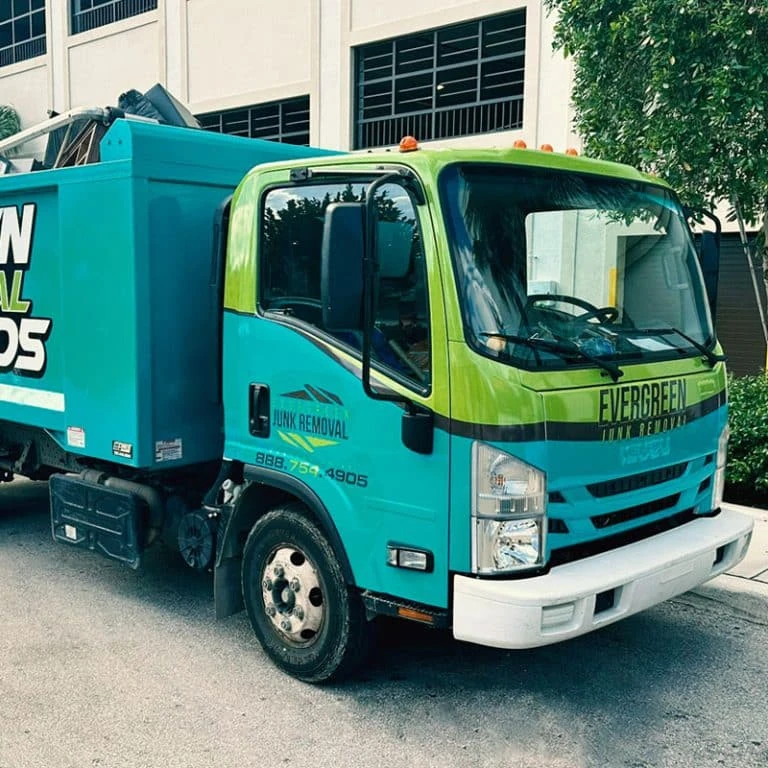
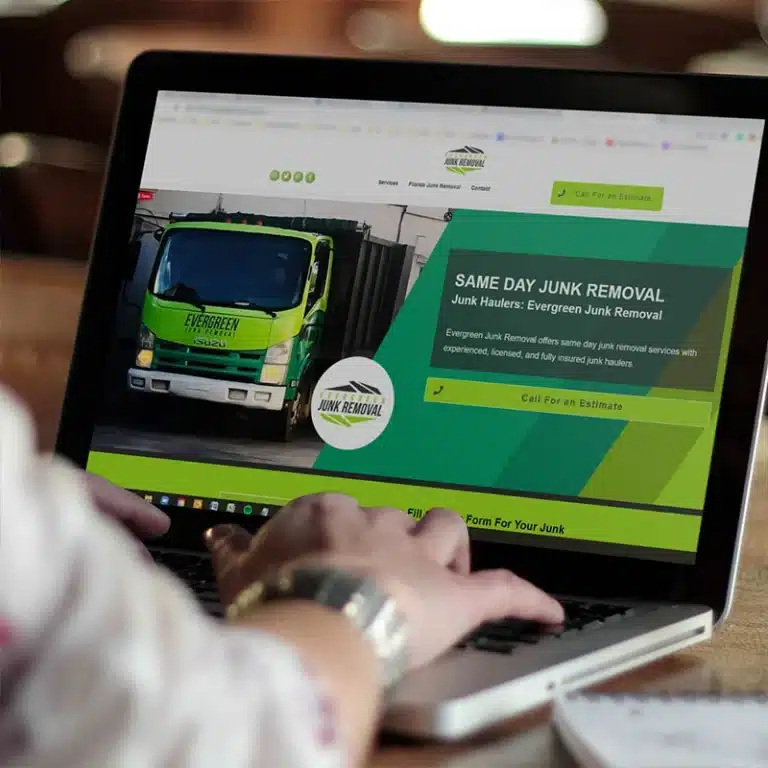
I worked with Evergreen Junk Removal, a business serving South Florida, starting around 2015. The business had no logo and no coherent visual presence. I designed the logo, rebuilt the website, created printed and digital flyers, social media and advertising graphics, truck decal-wrap designs, and infographics, and supported local SEO and website visibility alongside that work.
Over time, organic traffic grew substantially, the site reached top positions for multiple competitive local searches, and the business generated significant booked work each month across organic and paid activity combined. Paid advertising also contributed to those results, so I do not claim the visual work was the sole driver. But one outcome stood out: Miami-area clients began recognizing Evergreen’s trucks on the road. The visual system had become visible in the market. That kind of recognition does not happen with a placeholder identity.
Branding Packages for Startups are built specifically for businesses at this stage: a real offer, a serious founder, and a need for a visual system that can carry real weight from day one.
Research on branding ROI consistently shows that brands with active management programs deliver higher lead volume, stronger sales-pipeline contribution, and better marketing returns than those operating without a clear brand system. The investment compounds over time rather than depreciating.
Frequently Asked Questions
How does professional branding actually contribute to business growth and revenue?
Professional branding shapes how your market perceives you before any conversation happens. A consistent, credible identity builds trust faster, reduces the friction in a buyer’s decision, and makes your marketing more effective because every channel reinforces the same message. The visual system does not replace your sales effort; it makes every part of that effort land harder.
What is the measurable ROI of investing in professional branding services for a small or midsize business?
The ROI shows up in several ways: shorter sales cycles, stronger referral rates, and the ability to command pricing that reflects the perceived quality of your brand rather than competing on price alone. Active brand management has been shown to deliver 18% more leads, 21% higher sales-pipeline contribution, and 21% higher marketing ROI compared to businesses without them. Those gains accumulate over time as the brand becomes more recognized in its market.
How important is brand consistency across channels for attracting and retaining customers?
It is one of the most important factors. When your logo, colors, typography, and messaging are consistent across your website, packaging, social profiles, and printed materials, customers build a clear mental picture of your business. That clarity creates confidence. Inconsistency, on the other hand, creates doubt, and doubt costs you the sale. I build brand guidelines into every full identity project specifically to protect that consistency after the project is complete.
When should a growing business consider a rebrand or brand refresh with professional help?
The clearest signals are: your visual identity was never professionally built in the first place, you are entering a new market or competing at a higher level than when the brand was created, your audience has shifted significantly, or the brand no longer reflects what the business actually does. A rebrand should solve a specific problem, not just satisfy a desire for something new. If you are not sure whether a full rebrand or a focused refresh is the right move, that is exactly the kind of question a discovery conversation is designed to answer.
How much of a marketing budget should typically go toward branding versus performance marketing?
Industry analyses suggest many companies now allocate 10–20% of their marketing budgets to branding or rebranding initiatives. The right balance depends on where your business is in its development. Early-stage businesses often need to invest more heavily in brand foundation before performance marketing can work at full efficiency, because performance campaigns built on a weak or inconsistent brand tend to underperform. Once the brand system is solid, performance marketing has something real to amplify.
What are the key elements included in professional branding services?
A complete brand identity system includes logo design, a color palette with specific codes, typography selection, messaging and tone-of-voice guidelines, a brand standards document, marketing collateral, digital assets, and, depending on the business, packaging design and product visuals. Strategy and market research inform all of those decisions. The deliverables are not the end product; the system those deliverables create is. Branding services for startups and established businesses both follow this structure, scaled to the scope and stage of the business.
What is the role of a brand agent in maintaining a business’s identity?
A brand agent is a person or representative who maintains and communicates a brand’s identity on behalf of the business. Their role is to keep the brand’s message consistent across every channel and interaction, respond to audience feedback in a way that reflects the brand’s values, and adapt the brand’s communication to connect with its target market without drifting from the established standards. The concept applies whether the “agent” is an in-house marketing person, an external partner, or the founder themselves acting as the face of the brand.
What Professional Branding Requires from You
A professional brand system is built on information only you can provide. The discovery process works because the client brings the business knowledge and I bring the design expertise. Neither half works without the other.
You need to be able to articulate who your audience is, what problem your business solves, and where you want to position yourself in the market. If you do not have clear answers yet, that is not a disqualifier. Part of the discovery conversation is helping you develop that clarity. But the more specific you can be going in, the sharper the brand direction will be coming out.
You also need to be available for feedback. The process involves a loop of sketches, prototypes, revisions, and conversations. Clients who engage actively in that loop get stronger results than those who go quiet between rounds. The brand you end up with reflects the quality of that collaboration.
I generally start rebrands from scratch, including when the prior mark was improvised, generated by an automated tool, or created by someone without design training. If you want to retain a substantial portion of a pre-existing design, I will tell you that clearly upfront so you can make an informed decision about the direction. Transparency about authorship and process is part of how I work.
For businesses that need both brand identity and supporting Graphic Design Services, those can be scoped together or handled in sequence depending on what the project requires. Building the best brand designs starts with understanding the business, not with picking a visual style.
Investopedia describes the agent-principal relationship in terms that apply directly to any professional brand engagement: the agent, in this case the designer, is expected to act in the principal’s best interests without regard for self-interest. That alignment is what makes the relationship work. When the interests of the designer and the client are genuinely aligned around the business’s goals, the brand that results reflects the business rather than the designer’s personal aesthetic.
Professional branding services for your business growth, at their best, are not about handing over a logo file. They are about building something the business can grow into: a visual and strategic foundation that holds up as the business scales, enters new markets, and takes on larger clients.
If you are at a moment where the stakes have gone up and the brand needs to hold up with them, I would be glad to talk through what that looks like for your specific situation. Reach out and book a call, and we can start from wherever you are right now.
Genuine Branding Reviews From
Business Owners I've Helped
Time - 1:05 minutes
Time - 41 seconds
Time - 1:41 minutes
Time - 42 seconds
Let's talk about your vision for your brand. Use the calendar to book your free consultation call — you'll share your goals, get answers, and see whether we're the right fit for each other.