The most professional real estate branding for real estate agents building personal brands online and offline.

TL;DR
- Real estate branding is not a logo swap. It is a complete identity system: mark, color, typography, message, and digital presence working as one.
- 70% of home sellers prioritize agents with a consistent visual brand when deciding who to list with, making visual consistency a direct factor in winning listings.
- The agents who stand out are not the ones who spent the most on advertising. They are the ones whose brand makes a specific promise to a specific person and keeps it everywhere.
- An AI-generated mark or a brokerage template may get you started, but neither builds the kind of personal identity that earns referrals and holds up at a higher price point.
- A real estate rebrand typically runs four to six weeks from discovery to final files, and it starts with positioning, not with picking colors.
Real Estate Branding That Wins Clients Before You Ever Pick Up the Phone
Most agents treat real estate branding as the last thing to figure out, after the license, the brokerage, and the first few transactions. That instinct gets it exactly backwards. Your brand is what a buyer or seller encounters before you do. It is already forming an opinion on your behalf, and it is doing that job whether you designed it carefully or not.
The agents who feel this most acutely are the ones who have been in the business long enough to know they are good at what they do, but whose visual identity still looks like they are just getting started. The gap between your actual skill and how your brand represents you is the problem worth solving. 81% of consumers associate a strong online brand with a professional real estate agent. That number tells you how much work your brand is doing before you ever speak.
What Real Estate Branding Actually Includes
A brand is a system, not a single asset. Each piece has a role, and they work best when they work together.
Your visual identity is the entry point: your Realtor Logo, brand colors, and typography. Get these right and you read as the professional you are. Get them wrong and people move on before they finish reading your name. Your logo is not decoration. It is a signal. It tells someone at a glance whether you belong at the level you are claiming.
Your brand message is the story underneath the visuals. What do you specialize in? Who do you serve best? A first-time buyer needs to hear something very different from a seller listing a luxury property. Your message should speak directly to the person you want to attract, and it should do that in plain, specific language, not in the kind of vague agency copy that could apply to anyone.
Your online presence is where people go to confirm what they already sense about you. Your website and social profiles need to hold up under scrutiny: clean, current, and easy to navigate. 65% of homebuyers say they would choose an agent with a branded website over one without. That is not a minor preference. That is a decision point.
Your marketing materials carry your brand into the physical world. Business cards, signage, listing presentations, and printed collateral represent you when you are not in the room. And the client experience ties everything together. How people feel when they work with you is part of your brand. That feeling should match what your visuals promise.


Case Study: Luxury Real Estate Brand Identity Development
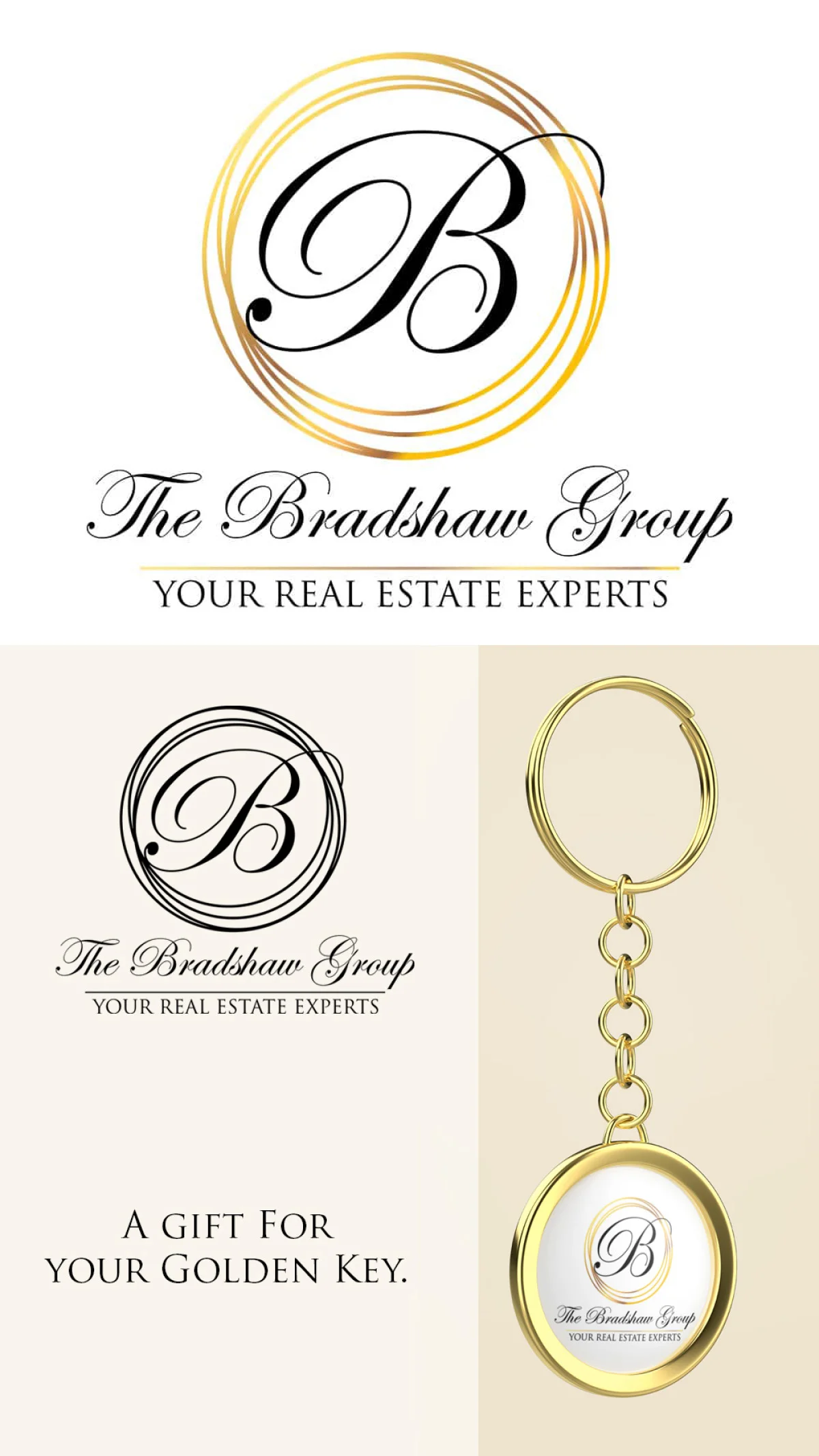
The Bradshaw Group is a luxury real estate brokerage that needed a brand identity strong enough to match the caliber of their listings. The challenge was clear: build a visual system that communicates exclusivity and trustworthiness while still feeling approachable to high-net-worth clients who expect both polish and warmth.
The foundation of the identity is an elegant monogram, a stylized “B” encircled by dynamic golden rings. That single mark carries significant weight, and here is how it earns it.
The cursive “B” draws on classic typography that signals heritage and refinement. Concentric golden circles create a sense of movement and a distinctly modern luxury feel. The black and gold color palette positions the brand at the premium end of the market while staying timeless. None of those decisions were made for taste alone. Each one was made because of where this brand lives and who it is speaking to.
The identity then had to hold up across every surface. That is where most brand systems either prove themselves or fall apart.


How the Identity Performed Across Physical Touchpoints
The office environment features a striking accent wall with diagonal gold stripes against white. Energetic, contemporary, and completely on brand. Modern lighting and minimalist furniture reinforce the aesthetic without competing with it.
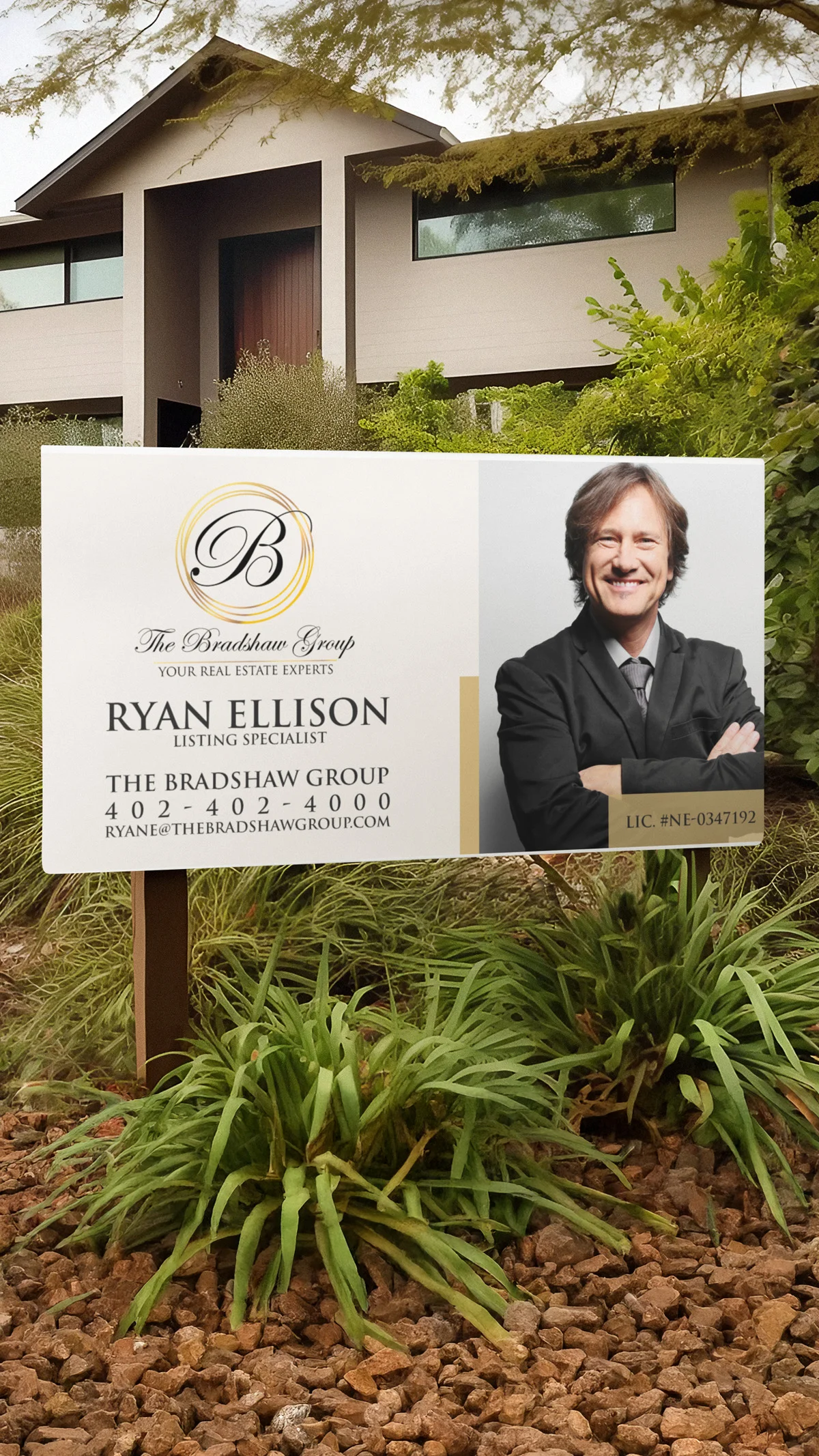
The vehicle wrap demonstrates exactly how well the mark scales to a larger format. A clean white base with precise logo placement keeps the look understated and sharp. That vehicle is moving through neighborhoods where the brokerage’s clients live. Every sighting is a brand impression. Key fobs and business essentials prove the logo holds its impact even at small scale, which is the real test of whether a mark was built to last or built to look good in a mockup.
Consistent typography and color application across all materials build instant recognition. That is the point of a system: every surface reinforces every other surface, and the cumulative effect is a brand that feels established even when it is new.
The Bradshaw Group identity positions the firm as a premier real estate brand while remaining genuinely appealing to the clients they serve. Every decision, from the office environment to the key fob, was made with intention. That is what a real brand system looks like when it is built with a clear purpose.
For anyone researching what a complete identity system looks like in practice, the branding packages examples page walks through real projects built for different industries, so you can see how these decisions translate across different markets and business types.

When a Direction Changes Mid-Project: A Real Agent’s Story
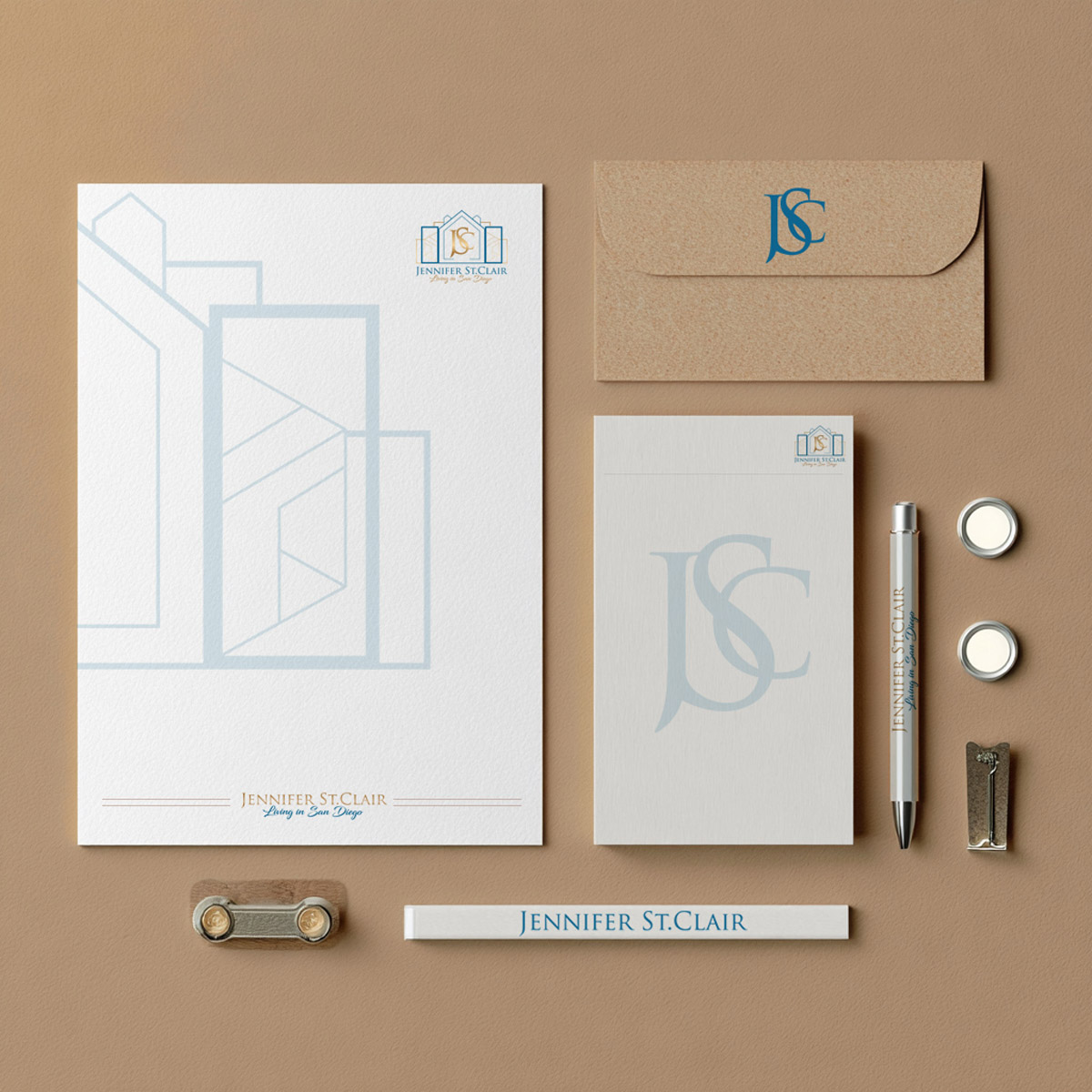
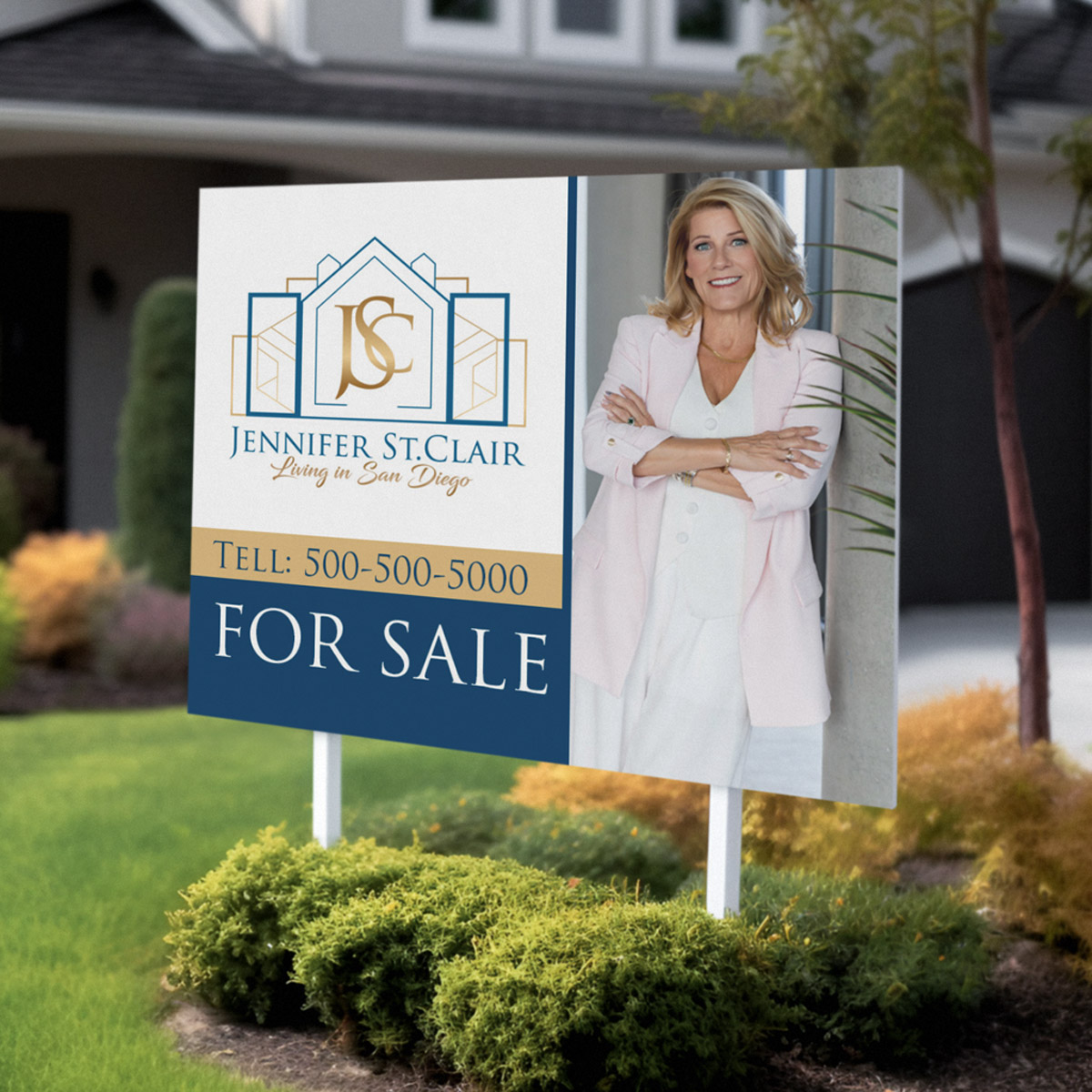
One project that comes to mind when I think about real estate branding is the work I did for Jennifer St. Clair, an agent with eXp Realty of California based in San Diego. She came to me with an AI-generated logo that she described as feeling like a sticker rather than a durable personal brand identity. She initially wanted a medallion-style concept.
Then her brand photoshoot happened. The photography clarified a completely different visual direction, and she pivoted. Entirely. Mid-project.
In my experience, this is actually a healthy sign. It means the client is paying attention to what their brand is becoming, not just what they imagined it would be. My job at that point was not to protect the original concept. It was to follow the new direction with the same rigor I brought to the first one. I worked through every revision until the mark aligned with who Jennifer actually is and the brand she had been building.
Her review said it directly: she felt the final logo reflected who she is. That is the standard. Not whether the first concept was technically strong, but whether the finished identity is genuinely hers. A luxury real estate branding project lives or dies on that same principle, just with higher stakes on every surface.
The AI-generated mark she started with was not the problem. The problem was that it had no relationship to her positioning, her photography, or her market. A tool that generates an image cannot ask you who your client is, what you want them to feel, or how your brand needs to hold up on a yard sign versus an Instagram reel. That judgment still requires a person.

What Are the Biggest Mistakes in Real Estate Agent Branding?
The biggest mistakes are the ones that quietly cost agents the most, because they are easy to miss until the brand stops performing.
Relying entirely on brokerage templates. Using the same generic colors and layouts as dozens of other agents under the same flag makes your marketing indistinguishable from your direct competitors. The brokerage brand is not your personal brand. It is a credential, not an identity. Agents who lean on it exclusively give up the one thing that could set them apart: a clear, specific signal of who they are.
Updating visuals without clarifying positioning. A new logo and fresh headshots are a good start, but if the underlying message has not changed, the result is a prettier version of the same generic brand. Agents who use consistent branding across social media, websites, and print are perceived as twice as professional as those with inconsistent or ad-hoc branding. Consistency is not just an aesthetic standard. It is a trust signal.
Overemphasizing production stats and awards. Sellers and buyers who are relationship-driven are not primarily moved by a wall of accolades. They want to know you understand them, that you are honest, and that you have done this before for someone like them. 35% of sellers say an agent’s reputation is the single most important factor in their selection decision, with trustworthiness and honesty cited separately. Brand around those qualities, not just around your sales volume.
Inconsistent use of fonts, colors, and photography. When your flyer looks different from your social post, which looks different from your listing presentation, people cannot recognize your marketing at a glance. Recognition is the whole point. Without it, every piece of collateral you produce starts from zero.

Ignoring What Your Target Clients Actually Want
Some agents build a brand they personally love without asking whether it resonates with the people they want to attract. Your brand is not for you. It is for your client. A first-time buyer needs warmth and clarity. A seller listing a $2 million property needs to see evidence of precision and discretion. Build the brand with that person in mind, and it will do its job.

Neglecting Your Online Presence
An outdated online presence is one of the most common and most damaging mistakes I see. Agents build a website, launch it, and then forget it exists. Blog posts from three years ago, outdated headshots, social profiles that have gone quiet: all of it sends the wrong signal to a buyer or seller who is doing their research.
57% of Realtors report using social media daily, which means your competitors are showing up in feeds regularly. If your presence has gone quiet, the contrast is noticeable. Your online presence is something you tend, not something you set and forget.
- Refresh your website regularly with new listings, recent sales, and updated photography
- Stay active on social media with market updates, local insights, and genuine engagement
- Respond to messages and comments promptly, because slow responses read as disinterest
- Audit your contact information and bios on every platform at least once a quarter
- Share real client experiences and results as they happen
Every one of these mistakes is fixable once you know what to look for. The discipline of maintaining your brand is what separates the agents people remember from the ones they scroll past.

Frequently Asked Questions About Real Estate Branding
How does a stronger personal brand help an agent win more listings or buyers?
A clearer brand makes you easier to remember, easier to refer, and easier to trust before a conversation even starts. Nearly two-thirds of recent sellers have already recommended their agent within a year of the transaction. A recognizable personal brand amplifies that referral because people can actually picture who they are recommending and find you quickly. The brand does not create the relationship, but it makes the relationship easier to pass along.
What branding elements matter most for agents who want to move beyond a generic look?
In my experience, positioning comes first: who you serve, what you specialize in, and what makes you the right choice for that person. The visual elements, logo, color palette, typography, and photography style, follow from that. An agent who has defined their niche clearly will have an easier time building a visual identity that actually reflects it. Without the positioning work underneath, even a well-designed logo is still generic.
How can independent agents differentiate their brand from their brokerage without violating franchise guidelines?
Most franchise agreements require that brokerage branding appear on certain materials, but they typically leave room for a personal identity layer above it. Your name, your photo, your personal logo, your color choices in social content, and your brand voice are all areas where you can build something distinctly yours. I recommend reviewing your specific agreement before making changes to any co-branded materials, and focusing your independent brand-building on channels and formats where the guidelines give you the most latitude.
How long does a real estate rebrand typically take, and what does the process involve?
Most full identity projects run four to six weeks from the discovery call to final files. My process starts with a discovery conversation covering your target audience, your market position, your existing assets, and your goals. From there I build an inspiration direction, develop hand-drawn compositional sketches, move into grayscale prototyping, and then test color. The logo becomes the foundation for any broader system: website, collateral, social templates, and signage. The timeline can shift based on scope and how quickly feedback moves through the revision cycle.
What role do social media platforms play in building a memorable real estate brand?
Social media is where your brand gets repeated exposure over time, and repetition is how recognition builds. 46% of Realtors say social media is the best tool for generating high-quality leads, ahead of other marketing technologies. But the platform only works if what you post is visually consistent and tonally coherent with the rest of your brand. An agent whose Instagram looks completely different from their website and yard signs is running three separate brands, none of them particularly memorable. Agents with an active YouTube presence see even stronger brand awareness gains, which is worth noting if video is part of your strategy.
How can agents tell whether their new brand identity is improving recognition, trust, and referrals?
The clearest early signals are qualitative: people mentioning your name unprompted, clients saying they found you because a friend described your brand, or prospects arriving already familiar with what you do. Over time, you can track how often new inquiries mention a specific referral source, how many of your past clients have recommended you within the year, and whether the quality of inbound conversations has shifted. Brand recognition compounds slowly and then noticeably. The agents who measure it consistently are the ones who catch when something is working and double down on it.
Is This the Right Investment for You?
This kind of work is right for you if you have been in the business long enough to know your niche and your market, and your current identity no longer reflects the quality of the work you do. It is right for you if you are moving into a higher price point, a new specialty, or a new market and you need your brand to open those doors rather than quietly close them.
It is also right for you if you want a one-on-one process, not a crowdsourced concept marketplace where dozens of designers submit generic ideas and you pick the least bad one. I ask the right questions, I listen to the answers, and I build from what I learn. That process takes longer than downloading a template. It produces something that actually belongs to you.
This is not the right fit if you are looking for a quick placeholder to get through your first year. A placeholder has its place. But if you are ready to invest in something built to last, something that compounds in recognition over time rather than something you will have to redo in 18 months, that is the conversation worth having.
Your brand is your storefront, your first handshake, and your most tireless representative, all at once. A sharp logo design, a cohesive website, and consistent marketing materials tell people immediately that you are serious. That first impression either opens the door or closes it. professional branding built around your specific market position creates recognition that compounds over time rather than starting over every time you update a headshot.
Real estate branding done well is not just about looking good. It is about building the kind of credibility that brings the right clients to you. website design that is current and visually consistent with the rest of your identity is part of that system, not a separate project. Branding and identity design executed with strategy behind it is what separates the agents people call from the ones they scroll past. And the brand design process that gets you there starts with a single conversation.
Build a Real Estate Brand That Earns the Clients You Want
Your website works around the clock. Even when you are not available, it is showing listings, sharing client stories, and giving new prospects a reason to reach out. It either builds confidence or it quietly talks people out of calling you. When someone searches for an agent, the brand that looks the part gets the call. That is especially true at the higher end of the market, where buyers and sellers expect everything to feel polished and intentional.
If your current identity is not doing that work, the gap is worth closing. Start with the positioning. The visuals follow.
Ready to Build Your Real Estate Brand?
A strong brand is not a luxury. It is the foundation your business grows on. It tells people who you are, who you serve, and why you are the right choice, before you ever say a word.
If you are an agent who has outgrown a generic look and you are ready to build an identity that actually reflects your experience and your market, I would like to hear about what you are working toward. Book a consultation and let’s figure out together what your brand needs to do next.
Genuine Branding Reviews From
Business Owners I've Helped
Time - 1:05 minutes
Time - 41 seconds
Time - 1:41 minutes
Time - 42 seconds
Let's talk about your vision for your brand. Use the calendar to book your free consultation call — you'll share your goals, get answers, and see whether we're the right fit for each other.